How to Read a Box Truck Owner-Operator Offer
Ten questions to put in writing before you sign, and how a lease onto someone else's authority changes the rules.

If you own a box truck and hold your own MC, most offers you see will promise the same things: steady freight, good pay, a dispatcher who has your back. The words are cheap and they are nearly identical from company to company. What separates a good offer from a bad one is in the details nobody puts in the ad: how the pay is calculated, what comes out of it, whether you can say no to a load, and how you leave.
This guide is a way to read those offers side by side. It assumes you already run under your own authority. If you are still deciding whether you need one, read what you need to run a box truck first.
Are you being offered work under your MC or a lease onto theirs?
Check this before anything else, because it changes which rules protect you. Some offers want you to keep your authority and haul for them as a carrier. Others want you to lease your truck onto their authority, which in practice means your MC sits idle while you run under theirs.
A lease of equipment to an authorized carrier is covered by federal rules in 49 CFR 376.12. The lease must state the pay on its face, list every item that can be deducted from your settlement and how each one is calculated, pay you within 15 days of submitting the delivery paperwork, and say that you are not required to buy or rent anything from the carrier as a condition of the lease.
When you run under your own MC, there is no lease, so those terms are not written in for you. They are whatever your agreement says. That is not a reason to avoid own-authority work. It is a reason to ask for the same things in writing.
What should you get in writing before your first load?
Use this as a worksheet. Send the left column to every company you are talking to, put their answers in the middle, and compare. An offer that will not answer in writing has answered anyway.
| Question | What to get in writing | Why it matters |
|---|---|---|
| How is my pay calculated? | Percentage of the load, rate per mile or flat rate per load, and what the percentage is taken from | A percentage of a number you never see cannot be checked |
| Will I see the rate on each load? | A copy of the rate confirmation or freight bill with each settlement | It is the only way to check a percentage deal |
| What comes out of my settlement? | Every deduction by name, and how each amount is worked out | “No hidden fees” means nothing until the fees are listed |
| When am I paid? | The pay day, and what has to be submitted before a load counts for that week | “Weekly” can still mean a load delivered late in the week waits for the next pay run |
| Can I turn down a load? | What happens when you say no: nothing, fewer offers, or a penalty | The difference between non-forced dispatch in name and in practice |
| Who is my dispatcher? | One named person or a shared desk, and their hours | A shared desk means re-explaining your truck every time |
| Where will I run? | Regions, how lanes are matched to your preferences, and home time | Good pay on lanes that keep you away all month may not suit you |
| Who covers empty miles? | Whether deadhead to pickup is paid, and how the next load is planned | Empty miles are fuel and time you pay for |
| What must my truck have? | Box size, lift gate, equipment, any age limit | Finding out after you sign means loads you cannot take |
| How do I leave? | Notice period and when the final settlement is paid | The last settlement is where disputes usually happen |
Insurance is not on the list because, under your own MC, the policy is yours and so is the filing. What a broker checks on it is in our box truck insurance guide.
What does “non-forced dispatch” actually promise?
It is a business promise, not a legal term, and it is worth separating from the law that already protects you. Under 49 CFR 390.6, a carrier, shipper, receiver or broker may not coerce a driver into breaking safety rules, such as the hours-of-service limits. That protection exists whatever the offer says.
Non-forced dispatch goes further. It means you can turn down a load that is perfectly legal because the rate is bad, the lane is wrong or you want to go home. The question to ask is what happens after you say no. If the honest answer is that the good loads go to someone else for a week, the dispatch is forced in all but name. Our guide to getting box truck contracts explains how forced and non-forced dispatch work day to day.

Ready to put your truck to work?
See whether your cargo van, box truck or straight truck fits our current loads. We review your MC and truck info within one business day.
Apply to drive with Vic’s →How do you compare two pay offers that are written differently?
Turn both into the same number: what lands in your account per week, after the company’s deductions and before your own costs. One offer quotes a percentage, the other a rate per mile, and neither tells you much until you run a typical week through it.
- Ask for a sample settlement. A real one with the names removed shows the deductions, the pay date and the format you will be living with.
- Count the empty miles. A rate per loaded mile looks better than it is if every load starts far from where the last one delivered. Ask how the next load is planned before the current one delivers.
- Use your own cost per mile. The offer that pays more is not always the one that leaves more. Our guide to box truck cost per mile shows how to work out your break-even, and box truck owner-operator pay covers what take-home looks like.
What are the warning signs in an offer?
- Pay you cannot check. A percentage with no rate confirmation behind it.
- Deductions described but not listed. “Standard fees apply” is not a list.
- Things you have to buy from them. Equipment, insurance or services sold by the company as a condition of working with it. Under a lease, 49 CFR 376.12 says that cannot be a condition. Under your own MC, treat it as a cost and price it.
- A request to give up your authority. If you came in with your own MC, an offer that only works once you stop using it is a lease offer. Read it as one.
- No exit terms. If the agreement does not say how and when you are paid on the way out, ask before you sign.
How does Vic’s answer these questions?
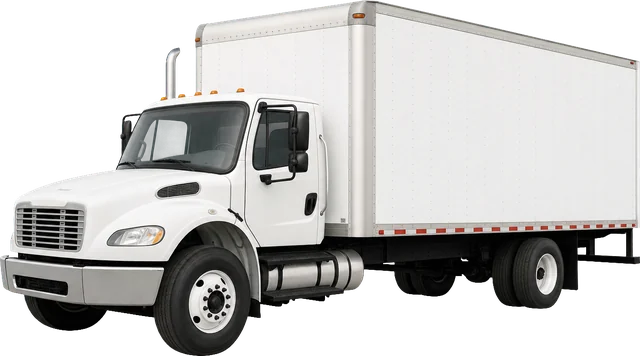
We work only with owner-operators who have their own truck and their own active MC, so you keep your authority. Dispatch is non-forced, you get your own dispatcher, and pay goes out by weekly direct deposit. Our freight is nationwide with a focus on time-sensitive loads, and your dispatcher aligns lanes to your preferences, aiming for minimum empty miles. We take cargo vans, sprinters, box trucks with a hydraulic lift gate and 26,000 lb straight trucks.
Ask us the questions in the table too. You can start on our owner-operator page: send your MC and truck info, and we review it and get back to you within one business day.