AOG Freight: When Ground Is Actually Faster Than Air
A practical decision framework for shippers when every hour has a price tag.
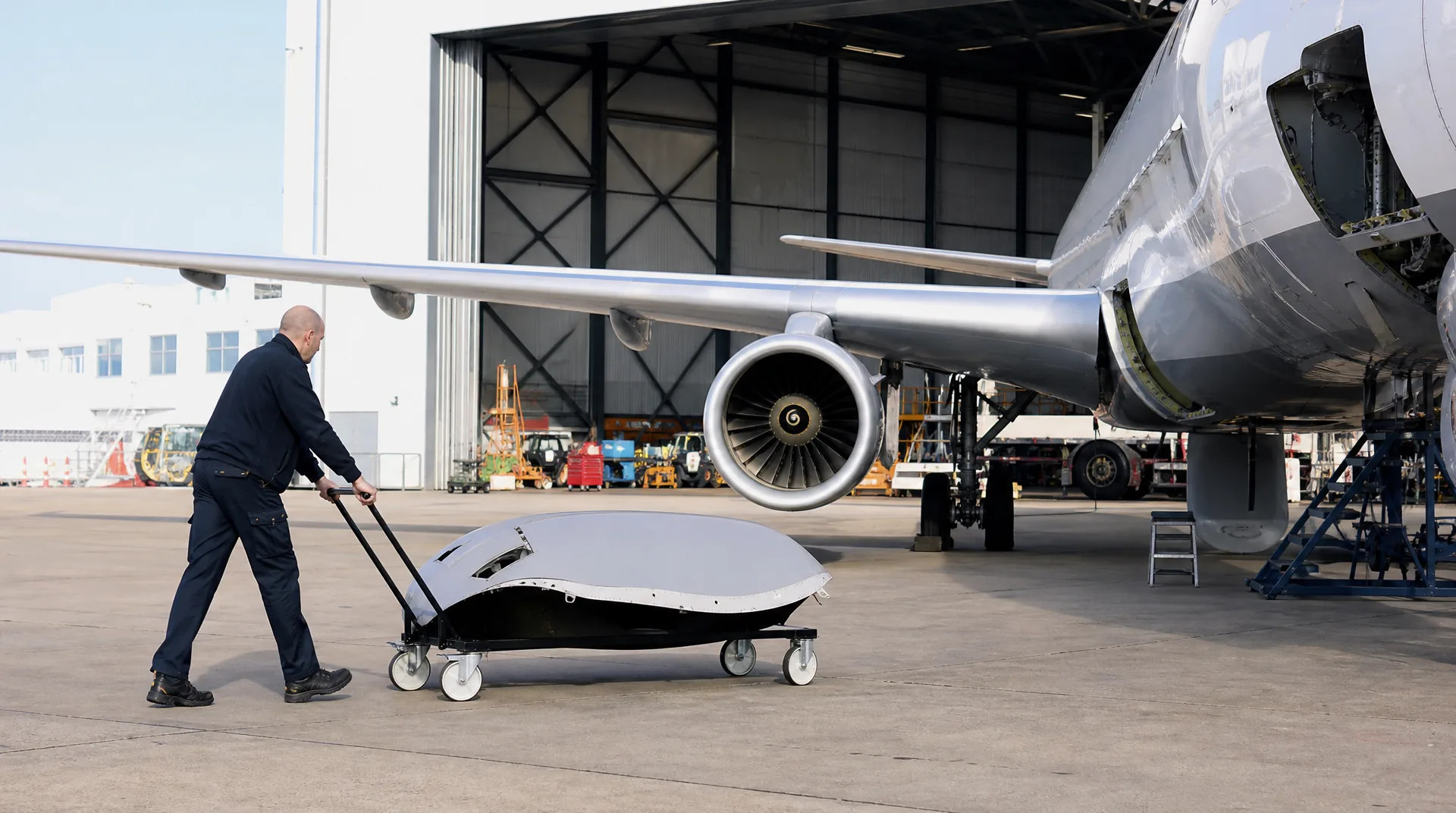
When an aircraft is grounded, the reflex is to book the next flight out. Air is fast in the air. The problem is everything that happens on the ground at both ends, and that is where an AOG part quietly loses a day.
So the real question is not air or ground. It is which one has fewer handoffs on your lane. The fastest option is the one with the fewest handoffs, not the one that flies. Count them, and on a lot of AOG runs the answer is ground.
A grounded aircraft does not care how the part travels. It cares when the part arrives and when the wrench turns. Every leg you add is a place the clock can stop. A truck that leaves now and does not stop is doing one thing. A flight is doing five or six, and each one has its own line, its own cutoff, its own chance to slip. That is the whole comparison. It is not about speed in motion. It is about how many times the part changes hands before it reaches the ramp.
Air vs ground for an AOG part, at a glance
| Next flight out (air) | Dedicated ground | |
|---|---|---|
| The path | Cutoff, screening, flight, terminal dwell, then a final-mile leg on each end | One driver, pickup straight to the aircraft, no terminal in the middle |
| Where it stalls | A full or bumped flight, a cancellation, an off-hub airport, weather | Only when drive time runs longer than a flight plus its handoffs |
| Best for | Long-haul, coast-to-coast, overseas | Short and medium lanes, off-hub fields, cross-border |
| Custody | Several handoffs | A single set of hands the whole way |
The first sixty minutes
What you do in the first hour usually decides the day. Start with three facts: where the part is right now, where the aircraft sits, and how the two connect by road. Not by airport code. By road. Pull the actual drive time, door to ramp, including the leg on each end that nobody counts until it is late.
Then price the flight honestly. Not the block time in the air. The full path: when does cargo cut off, how long does screening take, when does the terminal release on the far end, and who drives it the last stretch to the field. Add those up. Now you have two real numbers to compare instead of a gut call. If the truck number lands under the flight number, stop shopping flights and roll a driver. Every minute you spend confirming a booking is a minute the part is not moving. On a short lane, a driver who is already rolling has beaten the decision meeting.
Two lanes where ground gets there first
Take an off-hub run. The aircraft is down at a regional field that sees a cargo flight twice a week, and the part is a couple hundred miles out at a supplier. The next flight is not tonight, it is two days out, and even then it lands at a hub with another leg to the field. A truck rolls now and is at the ramp before that flight would have boarded. There is no schedule to wait for. The part sets the clock.
Now take a cross-border run between the US and Canada. Air adds a customs step at the terminal on top of the cutoff and the dwell, and any one of those can hold the part overnight. A dedicated driver clears at the line with the paperwork in hand and keeps moving. Same custody, same vehicle, front door to ramp. On a medium lane the drive time is real but it is known. You can plan against a known number. You cannot plan against a bumped flight.
How to make the call
Count the handoffs. A flight is not just the flight: it is a cargo cutoff, screening, terminal dwell, and a ground leg on both ends, any of which can stall or cancel. If a truck can reach the aircraft by road inside the time all of that takes, ground wins. In practice that is most domestic AOG lanes inside a day’s drive.
Ground is the clear call when the lane is short or medium, when either end is an off-hub field that only sees a cargo flight now and then, or when weather is putting the flight schedule at risk. Air earns it back on the long hauls, coast to coast or overseas, where drive time genuinely runs past a flight and its handoffs. The point is not “ground always.” It is to count the handoffs and pick the side with fewer.
What this looks like in practice
- A part two hundred miles out, with the aircraft at a regional field that sees a cargo flight twice a week. A truck rolls now and is there before the next departure even boards.
- A part that has to cross the country, time-critical, with a flight that genuinely beats the drive. Air is the right call, and we will tell you so.
- The evening flight gets cancelled by weather and the part is stuck until tomorrow. A truck already rolling cannot be grounded by a cancelled flight.
Air is fast in the air. It is the ground on both ends that costs you the day.
Where Vic’s fits
Vic’s runs dedicated ground for AOG parts across the US and Canada: one vehicle, one custody, pickup straight to the aircraft, dispatched on the part’s clock rather than a terminal’s cutoff. On a long-haul or overseas move where air wins, we will say so instead of putting a truck on a run it cannot win. On the short and medium lanes where ground gets there first, that is exactly what we do.
Get an instant quote. Tell us where the part is and where the aircraft sits, and we will tell you which mode gets it there first.