POD and Bill of Lading: The Paperwork That Gets a Load Paid
What to check on the bill of lading at pickup, what makes a proof of delivery clean, and how to send it so the invoice gets paid.
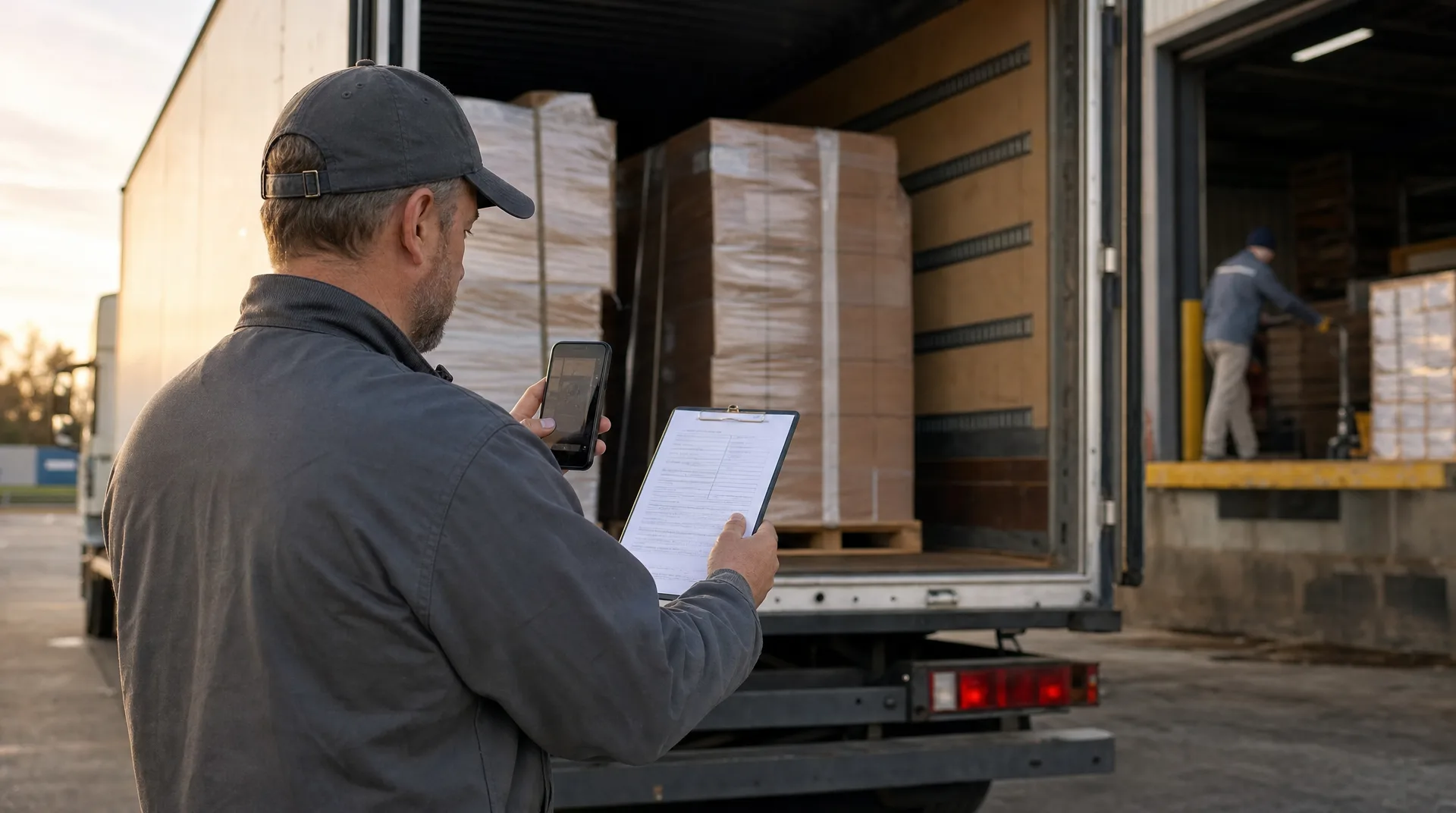
The load delivered on time. You sent the invoice that night, and a week later it is still sitting unpaid. The reason, when it finally comes back, is one line: POD missing, POD unreadable, or POD shows two pieces short. The freight arrived. The paper that proves it did not.
This guide is about the two documents that turn a delivered load into a paid one: the bill of lading you sign at pickup and the proof of delivery the receiver signs at the other end. Everything below is general practice for a box truck or cargo van owner-operator running under their own MC. What a payer actually requires is whatever your own rate confirmation or carrier agreement says, so check it for the exact list.
What are a bill of lading and a proof of delivery?
The bill of lading, or BOL, is the receipt for the freight. The shipper usually prepares it, you sign it at pickup, and from that moment it says what you took responsibility for. Federal rules list what a carrier’s receipt or bill of lading has to show: the names of the shipper and the receiver, the origin and destination, the number of packages, a description of the freight, and the weight, volume or measurement where the rate depends on it (49 CFR 373.101).
The proof of delivery, or POD, is that same paper, or a separate delivery receipt, signed by the receiver when the freight comes off your truck. On most brokered loads the POD simply is the bill of lading with the receiver’s signature, the date and any exceptions added at delivery. The BOL says what you picked up. The POD says what they accepted.
Why does the invoice wait on the POD?
Because whoever pays you, a broker, a shipper or a factoring company, has to be able to show that the load was delivered and accepted before they pay for it. Many rate confirmations make a signed POD a condition of payment, and the payment clock often starts only when the invoice and the POD arrive together. A load with no POD is, on paper, a load still in transit.
The POD also decides how much you get paid. If the receiver wrote “2 cartons damaged” on it, that note travels with your invoice and can turn into a claim or a deduction. A clean POD, one with a readable signature and no exceptions, is the cheapest insurance you will ever buy against a dispute.
Delivered is not the same as paid.
The load paperwork at a glance
Here is the paper trail for one load, from the call to the deposit. Most payment holds trace back to one missing row.
| Document and when | What has to be on it | What usually goes wrong |
|---|---|---|
| Rate confirmation, before you accept | Rate, stops, load number, payment terms, the POD and invoice requirements | Requirements you did not read, such as originals by mail |
| Bill of lading, before you leave the shipper | Shipper and receiver, piece count, description, weight, seal number if sealed, your signature and date | Count you did not check, seal number missing, no copy kept |
| Exceptions, before you sign at pickup | Short count, visible damage, or “shipper load and count” if you could not watch the loading | Signed clean, then blamed for a shortage at delivery |
| Proof of delivery, before you leave the receiver | Receiver’s signature and printed name, date and time, piece count, any exceptions | Scribble with no name, no date, a page missing |
| Photos, at both ends | Freight as loaded and as delivered, the seal, the signed pages | Taken after you drove away, or not at all |
| Invoice packet, same day as delivery | Invoice, rate confirmation, signed POD, any approved extras such as detention or a lumper receipt | Sent days later, unreadable scan, wrong address |
What should you check on the bill of lading at pickup?
Your signature on the BOL says you received what it describes. If the paper says twelve pallets and you have eleven, the twelfth becomes your problem at delivery. Before you sign:
- Names and addresses. The shipper, the receiver and the delivery address match the rate confirmation. A different receiver or city is a question to ask now, not at the destination.
- Piece count. Count what actually went on the truck, pallets or cartons, and compare it with the number written down.
- Description and weight. The freight on the paper is the freight in the box, and the weight fits your truck.
- Seal number. If the load is sealed, the seal number on the paper matches the seal on your door.
- Shipper load and count. If you were kept off the dock or the freight was already wrapped and loaded, ask for “shipper load and count” or “SLC” on the BOL. It records that the count is the shipper’s, not yours.
- Exceptions. Torn wrap, crushed corners, a leaking carton: write it on the BOL before you sign, and have the shipper initial it.
- Your copy. Leave with a copy or a clear photo of every page, signed by both sides.

Have your own MC and need steady freight?
Vic’s partners with cargo van, Sprinter, box truck and straight truck owner-operators who run under their own MC. Nationwide, time-sensitive freight and weekly direct deposits. We review your MC and truck info within one business day.
Apply to drive with Vic’s →How do you get a clean POD at delivery?
- Let the receiver count before they sign. A signature given before the count is checked is a signature on a guess. Stay with the freight while it comes off.
- Get a printed name next to the signature. Most signatures are unreadable. A printed name is what lets a payer, or you, find the person later.
- Get the date and time. Ask the receiver to write both. The time matters if you are also claiming detention.
- Get the exceptions written down, exactly. If something is short or damaged, the note should say what and how many: “1 pallet short, 2 cartons crushed,” not “damaged.” A vague note invites a vague claim against you.
- Photograph every page before you pull away. Flat, in good light, the whole page in the frame, every page including the back if anything is written there.
- Tell your dispatcher or broker right away if there was any exception: load number, what was noted, photos attached. A problem reported from the dock is a fact. A problem discovered from the invoice is an argument.
If the receiver signs clean and finds damage later, after you are gone, that is a different situation. The delivery receipt still matters in that claim.
Can you fix a bill of lading after it is signed?
Add to it, never change it. If a number is wrong, the fix is a new note, dated and initialed by the person who can confirm it, not a number written over. The paper also serves as a supporting document for your hours of service, which is one more reason not to alter it. A changed BOL is worth less than a messy one.
How fast should you send the POD, and how?
The same day, from the truck if you can. Every day the POD sits in your cab is a day added to when you get paid, and memory of what happened at the dock fades faster than the paper does. A packet that is easy to process gets processed first:
- One file per load. A single PDF with the invoice, the rate confirmation and the signed POD, named with the load number.
- A readable scan. Use a scanning app rather than a photo of a crumpled page on the seat. If you cannot read the receiver’s name on your own screen, neither can the payer.
- The right address. Send it where the rate confirmation says, and put the load number in the subject line.
- Extras in the same packet. Approved detention, a lumper receipt, a scale ticket. Extras sent later are often treated as a new request.
- Keep the originals. Some payers ask for originals by mail. Keep every paper copy until the load is paid and closed.
Five minutes in the cab saves five days on the deposit.
Why do PODs get rejected?
- The signature has no name or no date. Nobody can confirm who accepted the load or when.
- A page is missing or cut off. Multi-page bills of lading need every page, and exceptions are often on the second one.
- The load number does not match. The POD, the invoice and the rate confirmation all have to point to the same load.
- The count on the POD differs from the BOL with no exception noted to explain it.
- It arrived too late. Some agreements set a deadline for paperwork after delivery, and some pay slower or charge a fee past it.
- It is the wrong document. A gate pass or a warehouse receipt instead of the signed bill of lading the payer asked for.
What if a payment is disputed anyway?
Start with your own packet: the signed POD, the photos, and the messages you sent from the dock. Then ask the broker for its record of the load. Federal rules require a broker to keep a record of each transaction for three years, including the bill of lading or freight bill number, the compensation it received, and the amount of freight charges it collected and the date it paid the carrier, and they give each party to a brokered transaction the right to review that record (49 CFR 371.3). A clean POD on your side and the broker’s own record on theirs usually settle the question.
Where to start
On your next load, do three things: count before you sign the bill of lading, leave the receiver with a printed name, a date and a time on the POD, and send the full packet before you start your next trip. That alone removes the most common reasons a delivered load sits unpaid. When the paperwork is in order, you can apply to drive with Vic’s.