Pharmaceutical Logistics: Shipping Temperature-Sensitive Freight on a Deadline
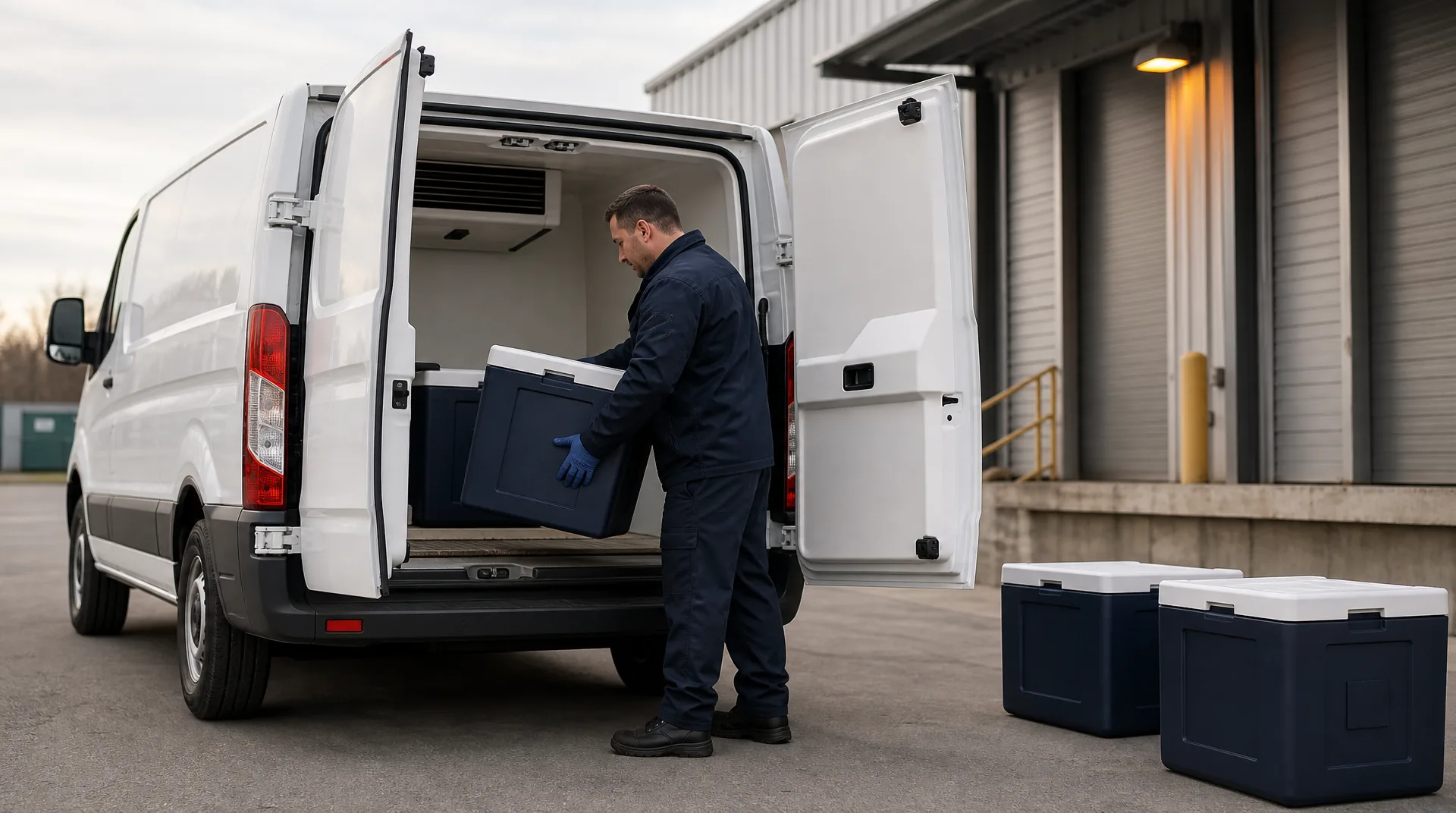
Most freight just needs to arrive. A temperature-sensitive pharmaceutical shipment needs to arrive on time and within its temperature range the whole way, and ordinary freight handling puts both at risk.
That is the real difference. With pharma, the deadline and the cold chain are the same delivery. Miss either one and the shipment can be worthless on arrival, even if the truck was fast.
What to think about when the freight is temperature-sensitive
Three things separate a pharma move from a normal rush shipment:
- The temperature range travels with the load, not just the deadline. A fast delivery that drifted out of range somewhere in the middle is still a failed delivery. The move is built to hold the range the whole way, not to hit it at the ends and hope about the middle.
- The custody has to stay clean. Every handoff is a point where the chain, and the paperwork that proves it, can slip. One vehicle and one driver keep the shipment traceable from pickup to delivery, which is the whole point of a controlled shipment.
- The documentation moves with the product. Whatever the load needs to be accepted at the other end has to stay with it and stay in order. This is coordination we handle alongside your team and your requirements, not a compliance claim we make on our own.
A late pallet is a problem. A pharma load that arrives warm is a write-off. The whole move is organized around that difference, which is the same logic behind when expedited freight is actually worth paying for.
What breaks a cold chain
A cold chain does not usually fail in one dramatic moment. It fails in the gaps. Knowing where those gaps are is most of the job.
- Time on the dock. Product sitting out while paperwork gets sorted, or while it waits for the next truck, is time the range is not being held. The clock starts at pickup, not at the highway.
- Handoffs. Every time the load changes trucks or terminals, someone new is responsible for keeping it in range, and the record gets harder to trace. Each transfer is a chance for the chain to open.
- Heat and cold outside the box. A hot dock, a cold ramp, or a trailer that has been baking in the sun works against the range the second the product is exposed.
- Loose loading. A container that shifts, tips, or gets buried under other freight can lose its packout. What kept it in range at pickup has to still be doing its job at delivery.
None of these are exotic. They are ordinary freight problems that become a write-off when the freight is pharma. You avoid them by closing the gaps before the truck moves, not by reacting on the road.
How a deadline run is handled
When the range and the deadline are the same delivery, the move gets planned backward from the drop. You start with when and how the shipment has to arrive, then build the run to protect that.
- The load is dispatched on the product’s clock. Pickup timing is set so the shipment is not sitting warm while it waits, and so the delivery window is the one that matters.
- One vehicle, one driver, straight through. No terminals, no relays, no changing hands. The load stays in one set of hands from pickup to delivery, which keeps it both traceable and in range.
- The environment is controlled the whole way, not checked at the dock. The point is to hold the range across the middle of the run, where an ordinary move stops paying attention.
- The documentation is ready before the wheels turn. Whatever the load needs to be accepted, and to cross a border if it has to, moves with it and stays in order.
The deadline and the cold chain get treated as one requirement, because that is what they are.
What to confirm before booking
A temperature-sensitive move goes smoothly when the details are settled up front. Before you book, have these ready:
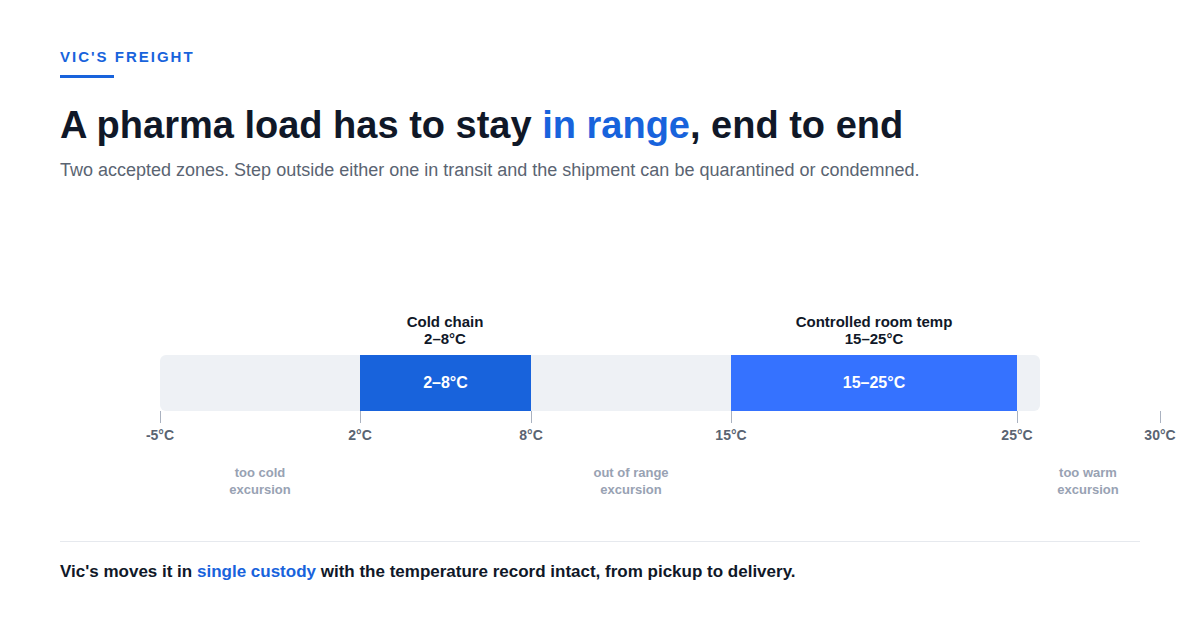
- The range the product has to hold, and whether it is cold chain or controlled room temperature.
- The real deadline: the appointment or window the shipment has to hit, not just “as soon as possible.”
- The packout it ships in, and how long that packout is rated to protect the load.
- What the receiver needs to accept it, including any documentation and any border requirements if it moves to or from Canada.
- Pickup and delivery access: hours, dock conditions, and anyone who has to be there.
Settle those before pickup and the run holds together. Leave them open and the gaps show up on the road, where they cost the most to fix.
What this looks like in practice
- A clinical or pharmacy shipment that has to hold its range for the full run, dispatched on the product’s clock with the environment controlled the whole way, not just checked at the dock.
- A high-value, sensitive load that cannot ride through terminals changing hands. One vehicle, one driver, straight through, kept traceable end to end.
- A shipment moving to or from a Canadian site, where the documentation has to clear the border too. It goes ahead of the truck so the crossing does not become the point where the cold chain or the timeline breaks.
Where Vic’s fits
Pharmaceutical is one of the verticals Vic’s is built for: dedicated, single-custody expedited across the US and Canada, kept in range end to end and moved the way the timeline requires rather than just quickly. We coordinate the handling and documentation your shipment needs with your team, and keep the load in one set of hands from pickup to delivery.
Get an instant quote. Tell us what you are moving, the range it has to hold, and the deadline you are up against, and we will move it the way a temperature-sensitive shipment needs to move.