What Is Expedited Freight? And When Is It Worth Paying For?
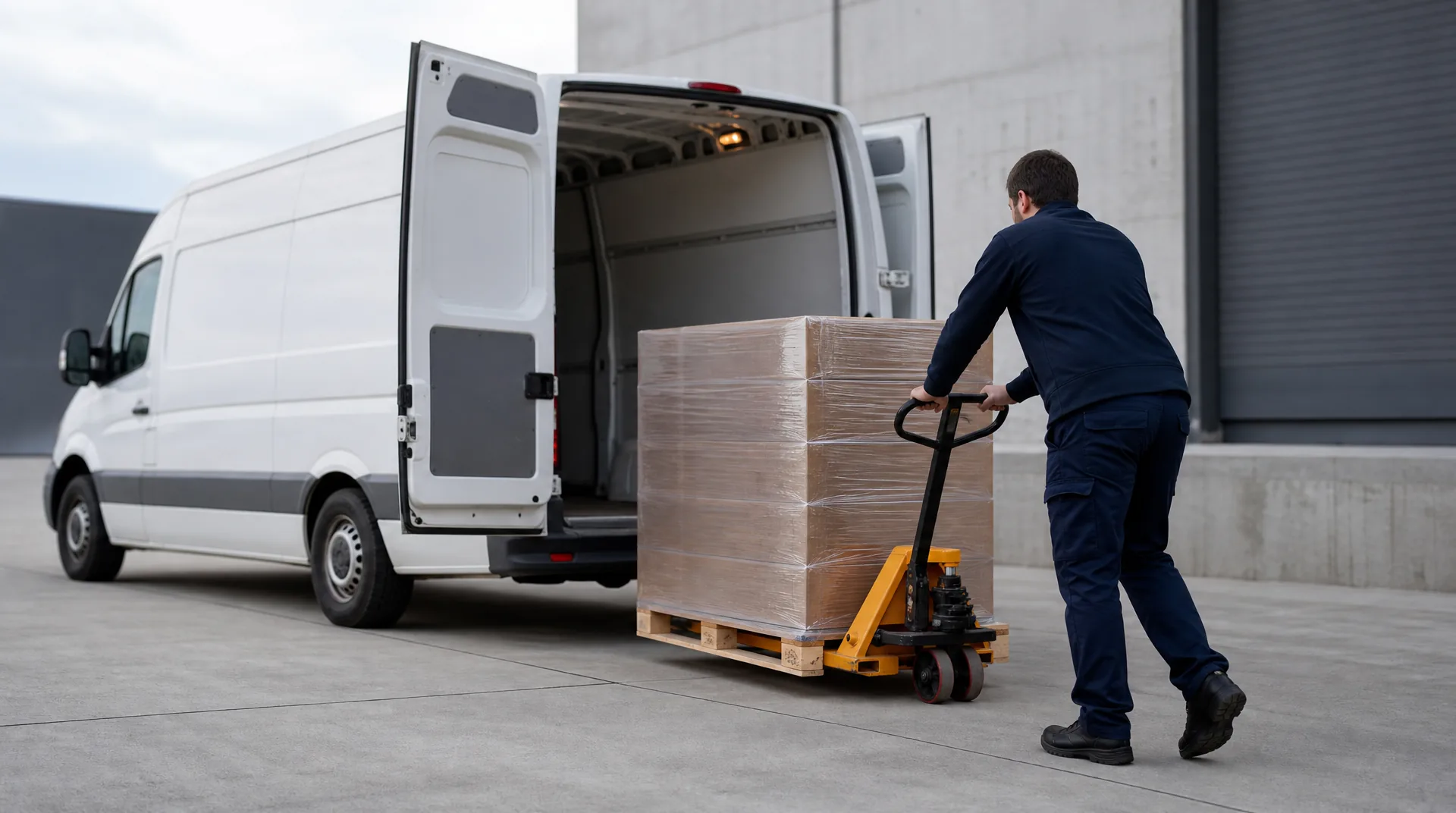
Expedited freight is shipping built around a deadline instead of a schedule: a dedicated vehicle assigned to your shipment, moving straight from pickup to delivery, tracked the whole way. No terminals, no waiting for the truck to fill up, no sitting in a hub overnight.
That’s the what. The more useful question is when you actually need it, because expedited isn’t the right tool for most freight. It’s the right tool when being late costs you more than the shipping does. If you’re searching this, you probably already have one of those shipments on your hands.
Expedited vs standard freight, at a glance
| Standard freight | Expedited freight | |
|---|---|---|
| What moves it | A network and a schedule | Your deadline |
| The vehicle | Shared with other shipments | Dedicated to yours |
| The route | Through terminals and hubs | Straight from pickup to delivery |
| When it leaves | When the lane is ready | When you need it to |
| What you’re buying | A spot in the system | Certainty on a specific clock |
The real difference: it doesn’t wait
Standard freight moves when the network moves. Your shipment shares a truck, rides through terminals, and gets there when the system gets to it. Most of the time that’s fine, and it’s cheaper, and you should use it.
Expedited flips that. The truck is yours, it leaves when your shipment is ready, and nobody re-handles it at a hub in the middle of the night. You’re not really buying speed. You’re buying certainty: a vehicle that’s committed to your load and a delivery window someone is actively managing.
Expedited freight isn’t a faster version of normal shipping. It’s a different promise: this one doesn’t wait.
When you actually need it
A few situations where expedited earns its cost:
- A missed delivery costs more than the freight. A stopped production line, a grounded aircraft, a job site that can’t start without the part. When downtime is the real bill, the shipping number stops being the point.
- The deadline is hard, not hopeful. “It’d be nice by Friday” is standard freight. “It has to be on the dock by 6 a.m. or the line stops” is expedited.
- The freight can’t be re-handled or can’t wait. High-value, sensitive, or time-bound shipments that you don’t want passing through a terminal and changing hands several times.
- Something already went wrong. A late supplier, a missed cutoff, a shipment that fell off the standard network. Expedited is often the recovery move when the normal plan broke.
If none of those fit, standard freight is probably the smarter call, and any honest carrier will tell you so. Once you know you do need it, the next question is usually how fast, which is its own decision between same-day and next-day delivery.
How an expedited shipment actually moves
It’s simpler than the standard network, which is the whole point. A vehicle sized to your freight, from a cargo van up to a straight truck, gets assigned to your shipment and only your shipment. The driver picks up, drives it through, and delivers, with live tracking the whole way so you’re not guessing where it is. Which vehicle you need comes down to size and how it loads, not just the weight, and we get into that in our guide to choosing a cargo van, sprinter, or box truck.
There’s no terminal step because the terminal step is exactly what expedited removes. Every handoff is a place a shipment can wait, and waiting is the thing you’re paying to avoid.
What this looks like in practice
- A part has to reach an assembly line by morning or the line goes down. Standard freight can’t promise the window. A dedicated van leaves now and the deadline is something a dispatcher is watching, not hoping for.
- A supplier missed the cutoff and the shipment is about to be a day late. Expedited picks it up directly and puts it back on schedule, around the network that dropped it.
- A high-value, sensitive shipment that can’t ride through three terminals changing hands. One vehicle, one driver, straight through, tracked end to end.
The thread through all three: it’s not about going fast for its own sake. It’s that the cost of being late is higher than the cost of the truck.
When it isn’t worth paying for
Expedited is easy to over-order once you’ve been burned by a late load. Resist that. If the delivery date has slack in it, standard freight moves the same box for less and the dedicated truck buys you nothing. Watch the loads where the deadline sounds urgent but isn’t. “Get it out today” often means “this week is fine” once you ask. Before you book a dedicated vehicle, pin down the real consequence of being late. If nothing downstream stops, breaks, or costs you, book standard and keep the difference. A carrier that pushes expedited on every shipment is selling, not advising.
What it costs (the short version)
There’s no flat rate, because every expedited run is priced on the specifics: the vehicle, the distance, the deadline, and the lane. That’s not a dodge, it’s just how dedicated capacity works, and we break down what actually moves the number in our piece on what drives the cost of expedited freight. The short version: you’re paying for a truck that’s yours and a clock someone’s managing, and the quote reflects your specific run rather than an average of everyone’s.
Where Vic’s fits
Vic’s runs expedited freight across the US and Canada: dedicated, enclosed vehicles from cargo van to straight truck, each assigned to a single shipment and driven straight through, tracked the whole way. When your shipment genuinely needs it, that’s the work we do. When it doesn’t, we’ll tell you standard freight is the better call. Either way you get a straight answer.
Get an instant quote. Tell us what you’re moving and the deadline you’re up against, and we’ll tell you whether you need expedited and what it takes to hit the window.