What Drives the Cost of Expedited Freight
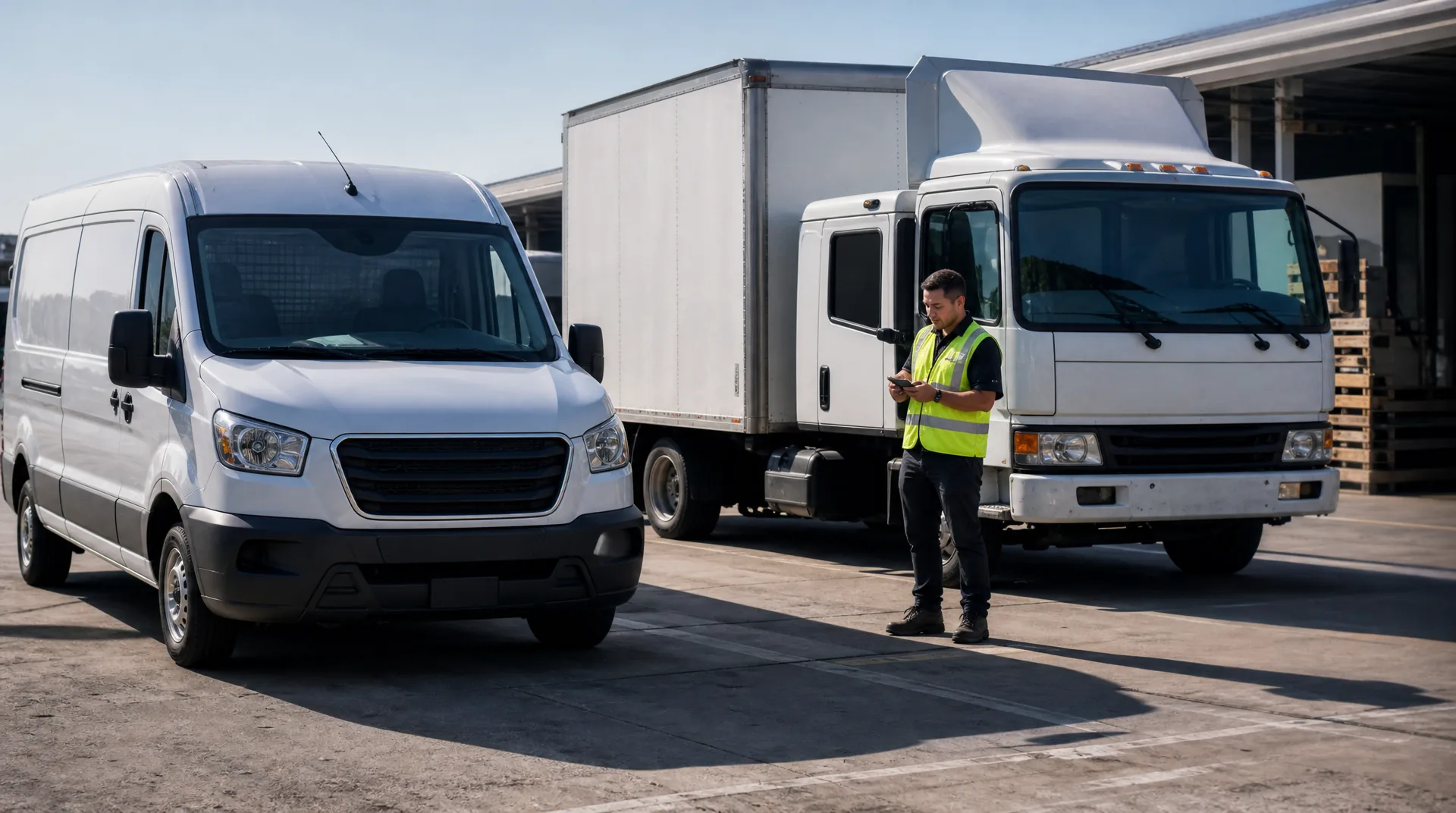
You priced what feels like the same shipment twice and got two very different numbers. It is a common question in expedited freight, and the answer is not a billing trick.
Expedited freight is not priced off a tariff sheet. There is no per-pound rate to look up, because every urgent shipment books a vehicle for itself, and the price is built from that shipment’s specifics rather than an average. Here is what actually moves the number, and what you can control.
The drivers at a glance
| Cost driver | What moves the price |
|---|---|
| Distance + deadhead | Loaded miles, plus the empty miles a dedicated vehicle drives to reach your pickup |
| Vehicle size | Cargo van, then sprinter, box truck, straight truck; you pay for the one the freight needs |
| Speed / deadline | A direct single-driver run vs a true around-the-clock team move |
| Lane & region | An easy corridor vs a rural pickup or a one-way move trucks struggle to leave |
| Dock time & extras | Detention, liftgate, inside delivery, a second stop |
| Timing & notice | Nights, weekends, holidays, and how little lead time you have |
| Cross-border | US–Canada customs coordination |
What this looks like in practice
Three versions of a similar shipment, and why each prices differently:
- A pallet of auto parts, supplier to plant, booked at 9 a.m. with a truck already nearby. Sprinter-sized, short deadhead, daytime, time to plan. This sits at the low end.
- The same pallet, but the call comes at 1 a.m., the part is crated onto two skids that now need a straight truck, and the nearest vehicle is three hours out. Bigger vehicle, long deadhead, after-hours dispatch. Same freight, a materially higher number.
- A time-critical part from Toronto to Ohio. Now add customs to the run. With the paperwork prepped ahead it stays fast, but the cross-border work is real and shows up in the price.
Same category of freight, three different numbers. None of it is padding. It is the run itself.
Distance, and the miles before the miles
The loaded miles are the obvious part. The ones shippers miss are the deadhead: a dedicated vehicle has to reach your pickup first, and on an expedited run you are paying for that positioning. A part 30 miles from an available truck prices differently than the same part when the nearest truck is three hours out. It is also why a quote moves hour to hour. It depends on where capacity is the moment you call.
The size of the vehicle, not the size of the pallet
Expedited ground runs on a ladder of vehicles: cargo van, sprinter, box truck, straight truck. You pay for the vehicle the freight needs, not by the pallet. And it is usually the size that decides which vehicle that is, not the weight. A light but bulky load can fill a box truck long before it ever gets heavy, so dimensions often set the price more than pounds do. A single skid that fits a sprinter prices well below one that forces a straight truck, so getting dimensions and weight right up front is the difference between an accurate quote and a surprise at the dock.
How fast it has to be there
“Expedited” covers a range. A direct run with one driver is one price; a true around-the-clock move with team drivers who do not stop to sleep is another. The tighter the deadline against the distance, the more the freight has to skip, and that is what you are paying for. A real deadline gets you the right price. A padded “ASAP” just buys speed you did not need. And whether the run needs to be same-day or next-day is its own call.
Where it picks up and drops
A metro-to-metro run on a common corridor is easier to cover than a rural pickup where trucks are scarce, and a one-way move into a region trucks struggle to leave can carry the cost of getting that vehicle back out. That is not a surcharge tacked on. It is the real cost of moving a dedicated vehicle through that geography.
What happens at the dock
Long loading or unloading waits, a liftgate, inside delivery, a second stop: each adds real time and cost. The cleanest way to keep a quote low is a fast, ready dock on both ends. Waiting is billable time.
Timing and short notice
A truck dispatched at 2 a.m., on a holiday weekend, or twenty minutes after you call costs more than the same run booked with a few hours’ lead. Expedited exists for the short-notice case, but where you have lead time, using it lowers the number. Lead time is the cheapest discount there is.
Crossing the US–Canada border
A cross-border run adds customs coordination, which is real work and part of the price on those lanes. Done right it does not add a delay. We get into how that works in our guide to cross-border expedited freight.
What you can actually control
- Give accurate dimensions, weight, and piece count. Vehicle size is the single biggest lever.
- State the real deadline. Speed you do not need is cost you do not need.
- Have the freight ready and the dock moving. Waiting is billable time.
- Call before it is an emergency where you can.
Why we quote the lane, not a flat rate
There is no honest flat rate for expedited freight. Anyone who gives you one before they know your lane is guessing. The only number that means anything is the one built for your pickup, your destination, your deadline, and the vehicle your freight actually needs. Give us those four and you get an exact price, not an estimate.
Get an instant quote. Tell us the two points and the freight, and we will price the real run.