Automotive Freight: Keeping a Production Line From Going Down
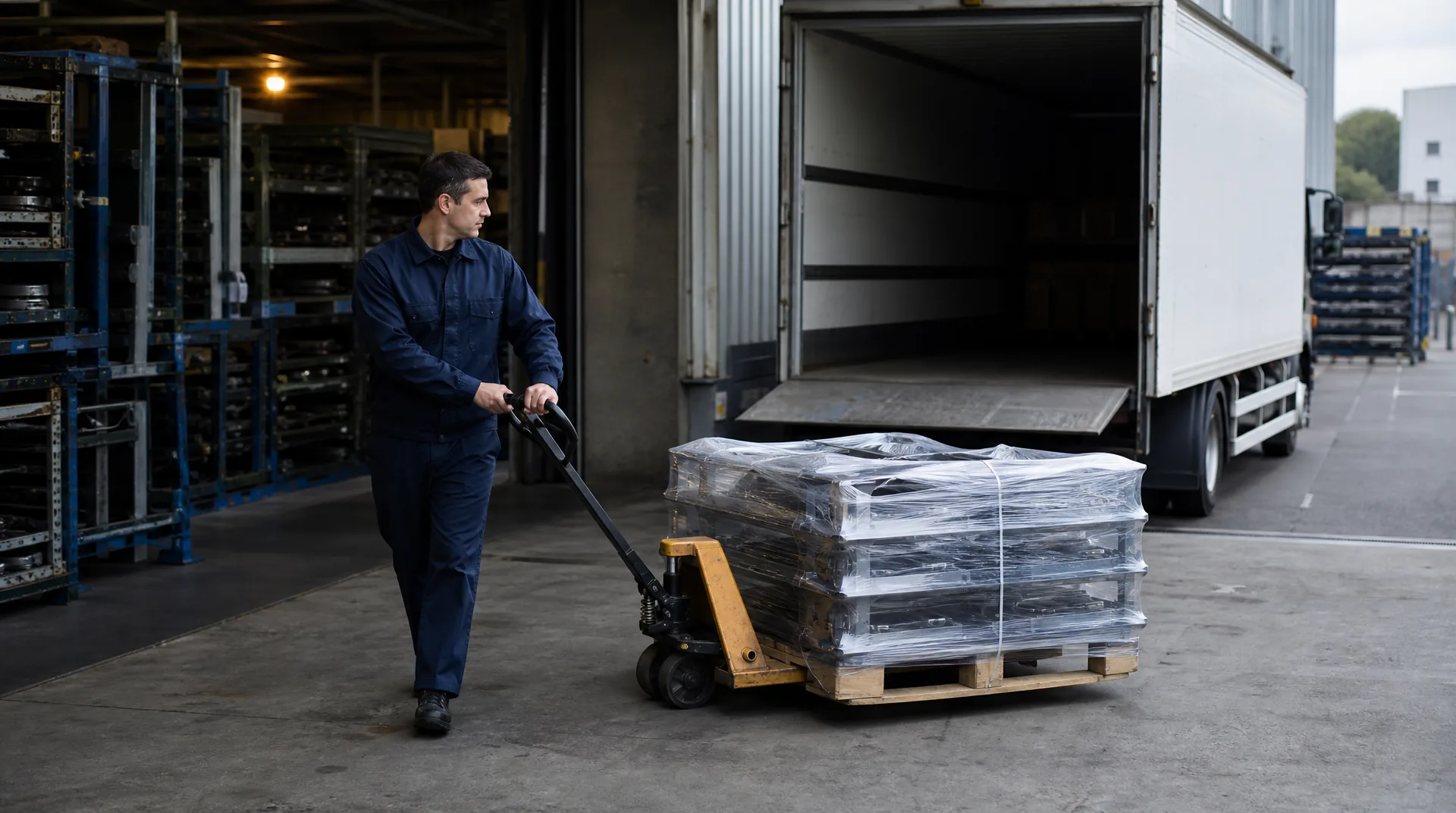
Most freight is late in hours. A missing automotive part is late in dollars per minute, because the thing waiting for it is a running production line.
That is the real difference. When a line goes down for a part, the freight bill stops being the number that matters. The number that matters is what the plant loses for every minute the line is stopped. The people planning that plant already know it. By the time they call for a truck, they are not shopping rate. They are buying back time.
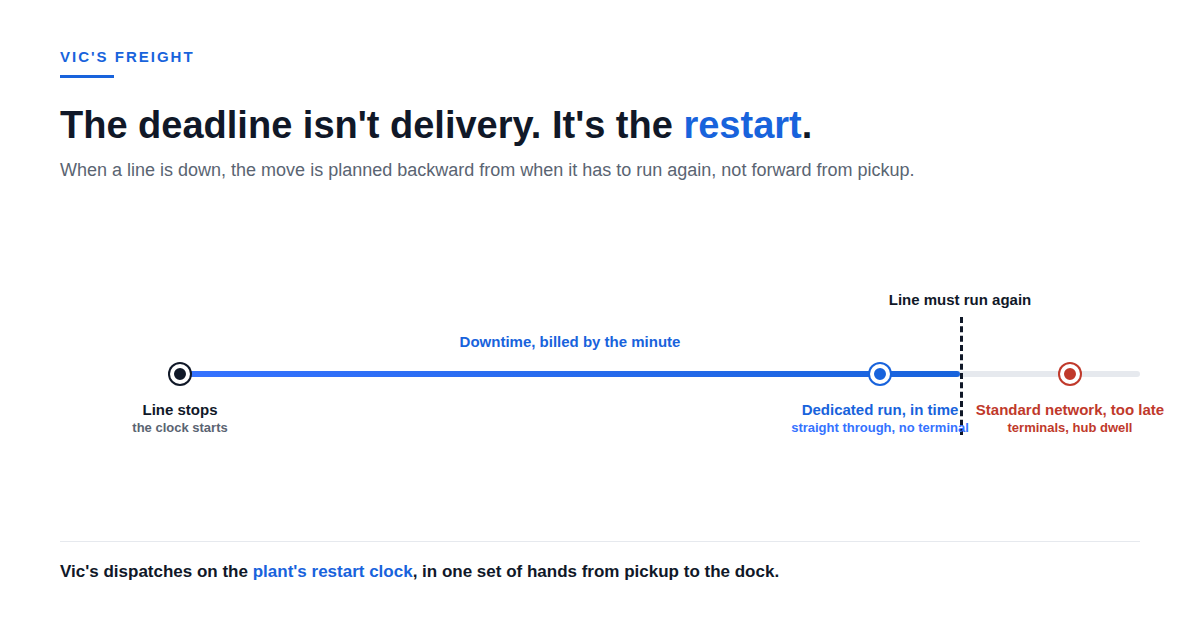
What to think about when a line is down for the part
Three things separate a line-down move from a normal rush shipment:
- The deadline is the restart, not the delivery. A part that arrives fast but after the shift is planned around it has still cost a day. The move is built backward from when the line has to run again, the same way an AOG part is built backward from the aircraft.
- Dedicated beats the network when a plant is waiting. A part riding the standard system shares a truck and passes through terminals, and every stop is time the line stays down. One vehicle straight to the plant takes those stops out.
- Recovery is half the job. Line-down freight is usually a supplier that missed, a shipment that fell off schedule, or a part that failed inspection late. The move has to pick it up directly and put the plant back on its build clock, around whatever broke.
A late pallet is a problem. A stopped line is a bill that grows every minute, which is the whole reason expedited is worth paying for when being late costs more than the freight.
The first hour after a line goes down
The first hour decides the rest. Most of the time lost on a line-down move is lost before the truck even rolls, on the phone and in the yard, not on the road. Tighten that hour and you shorten the whole move.
Get these answers before you get a quote:
- What the part is, how many, and how it is packed. Weight and dimensions decide the vehicle. A sequenced rack loads differently than a single carton.
- Where it is right now, and who can hand it over. A dock that is staffed and expecting the driver saves the pickup. A locked gate does not.
- When the line has to run again. That is the deadline the move is planned against. Everything else is scheduled backward from it.
- Where it is going, and who signs for it at the plant. A named contact on the receiving dock keeps the part from sitting once it arrives.
Have that ready and the dispatch is a short call. The driver knows what to grab, where to grab it, and what clock they are racing. The part that kills a line-down move is the question nobody could answer while the vehicle sat and waited.
Hot shot or dedicated for a line-down
Both go straight through. The difference is the size of the problem and how far it has to travel.
A hot shot fits the small, close, right-now version. One part, one skid, a plant a few hours out, a driver who leaves now and does not stop. It is fast and it is direct, and for a lot of line-down calls it is exactly enough.
Dedicated ground fits the longer haul, the heavier load, and the run that has to hold a hard restart time across a full day of driving. When the part is coming from another region, or when a miss means a team on two drivers to keep the wheels turning, dedicated is the move. Same idea, more capacity, and one set of hands the whole way.
You do not have to sort that out yourself. Tell the dispatcher the part, the distance, and the deadline, and the right vehicle gets picked for you. The wrong call is not hot shot versus dedicated. The wrong call is putting a line-down part on the standard network and hoping the terminals cooperate.
What this looks like in practice
- A supplier misses the cutoff and the sequenced part is about to stop the line. A dedicated van picks it up directly and runs it straight to the plant, on the restart clock.
- A machine-down part at a tier supplier, where the delay ripples up to the assembly plant if it is not there in time. One driver, straight through, no terminal in the middle.
- A part crossing between US and Canadian plants, where the documentation has to clear the border too. It goes ahead of the truck so the crossing does not become the thing that keeps the line down.
What ties those together is that the truck was never the whole answer. The part had to be found, picked up clean, and routed around whatever broke, and the driver had to arrive before the line was planned to run, not just quickly. Speed on the road is easy. Speed on the whole move is the job.
Where Vic’s fits
Automotive is one of the verticals Vic’s is built for: dedicated ground for line-down and just-in-time parts across the US and Canada, dispatched on the plant’s restart clock rather than a terminal’s cutoff, kept in one set of hands from pickup to the dock. When a line is waiting, that is the work we do.
Get an instant quote. Tell us the part, where it is, and which plant is waiting on it, and we will move it the way a line-down part needs to move.