Reconsignment: Changing a Delivery Address in Transit

Short answer
Reconsignment is a request to change where a shipment goes, or who receives it, after the carrier already has it. Carriers accept it in writing from someone with authority over the freight, for the whole shipment only, and with no promise that it will work. The price depends mostly on timing: a change made before the freight goes out for delivery costs less than one made after the truck has tried to deliver. On guaranteed LTL, a reconsigned shipment can lose its guarantee.
The freight left the dock this morning. Now the receiver calls: they want it at their other warehouse, or the order was cancelled, or the job site moved. Can you still change where it goes, and what will it cost you?
Usually you can, and it has a name: reconsignment. Here is what carriers mean by it, what they need from you, why the timing decides most of the price, and what changes when the freight is on a dedicated truck instead of an LTL network.
Reconsignment at a glance
| Question | Short answer |
|---|---|
| What it is | A change to the consignee or the delivery address after the carrier has the freight |
| Also called | Diversion |
| Who can ask | The shipper, the consignee or their authorized agent |
| How to ask | In writing, or confirmed in writing |
| What can change | The whole shipment only, not part of it |
| Is it promised | No. Carriers make a “diligent effort” |
| What drives the cost | When you ask, and whether the new address is in the same delivery area |
| Guaranteed service | Some LTL guarantees do not apply to reconsigned shipments |
What is reconsignment?
On an LTL shipment, the bill of lading names a consignee and a delivery address. Reconsignment changes one or both while the freight is with the carrier. Carriers list it as an item in their rules tariff, and the definitions are close across carriers.
TForce Freight’s rules tariff (Item 820) counts three things as reconsignment or diversion: “a change in the name of the shipper or consignee, or a change in the place of delivery or destination point,” a return to the shipper at the point of origin, and a hand-off to another carrier the shipper names. Old Dominion’s rules tariff (also Item 820) includes “a change to pick up at Carrier’s terminal.”
So “send it back,” “hold it at the terminal for us” and “deliver it to the other address” are all the same request to the carrier. Each one is billed as a reconsignment.
The rules carriers attach
The conditions read almost the same in both tariffs. Plan around them before you call.
- It has to be in writing. TForce Freight requires requests “made in writing or confirmed in writing.” Old Dominion requires them “in writing from the shipper, consignee or their authorized agents.” A phone call starts the process. The email makes it real.
- You have to have authority. Both say the carrier “must be satisfied that the party making the request has the authority to do so.” A third party who is not on the paperwork can expect questions.
- Notes on the label do not count. Both refuse to treat disposition instructions printed on the bill of lading, the shipping label or the container as authority to reship, return or reconsign. “If refused, return to sender” written on the box is not an instruction.
- All or nothing. “Only entire shipments, not portions of shipments, may be reconsigned or diverted.” If two pallets go to one address and one to another, that is two shipments from the start.
- Charges come first. All charges already accrued or accruing must be paid or guaranteed before the carrier makes the change.
- No promise. TForce Freight “will make a diligent effort to execute a request for reconsignment, but will not be responsible if such service is not effected.”
Two more conditions catch people. Old Dominion is “not obligated to retrieve a shipment that is already loaded on a vehicle and ready for over the road transportation.” If your freight is already on a line haul trailer, the change happens at the next place that trailer unloads, not where you are standing. And shipments moving in bond, under customs control, have their own restrictions: TForce Freight does not permit reconsignment on them at all.
Why the timing decides the price
Both tariffs split the charges by one moment: the “tender of delivery,” when the carrier has the freight out for delivery or has already tried to deliver it.
TForce Freight treats a request as “prior to tender of delivery” only if it arrives before the shipment has been loaded on a delivery vehicle or dispatched for delivery. After that, the “after tender” charges apply. For a new address inside the same destination area, the flat per-shipment charge becomes a charge by weight with a minimum per shipment. For a change of name after tender, the tariff adds a redelivery charge where one applies.
Old Dominion charges an administrative fee on every reconsigned shipment, and line haul is recalculated through the point where the change happens, unless the change is made before the freight leaves the origin terminal, or to a point inside the same delivery area before it leaves for delivery. Its tariff adds another administrative fee “each time Carrier is requested or required to amend the shipment instructions, including but not limited to, reversing a prior reconsignment.” Changing your mind twice is billed twice.
The line to remember: the earlier you call, the fewer miles you pay for twice.

Freight That Might Change Course?
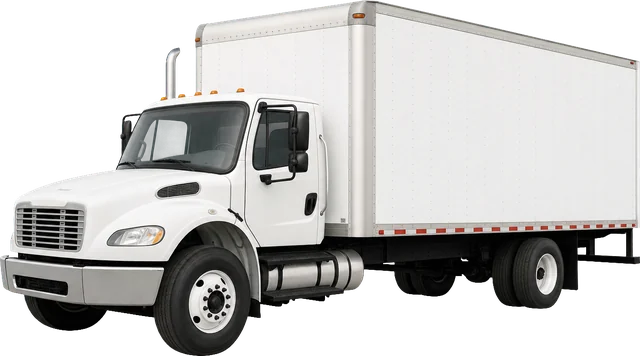
Vic’s runs cargo vans to straight trucks across the US and Canada, one shipment per vehicle, with dispatch that answers 24/7. Send the pieces, both addresses and the deadline.
Get an instant quote →What happens to a guaranteed delivery
If you paid for a guaranteed LTL service, read the exclusions before you reconsign. TForce Freight lists “Reconsigned shipments (Item 820)” among the conditions under which its LTL Guaranteed provisions do not apply. Check the exclusions in your own carrier’s guarantee. We covered how those lists work in expedited LTL vs guaranteed LTL vs dedicated.
In practice: once you change the destination, assume the delivery date is open again, and ask the carrier for a new one in writing.
What changes on a dedicated truck
The tariff rules above are written for networks. Your pallet sits in a terminal with freight for dozens of other customers, moves on a line haul trailer, and goes out on a local delivery route. Every change means pulling it out of that flow, which is where the retrieval, rehandling and recalculated line haul come from.
On a dedicated truck, your shipment is the only one on board. There is no terminal to stop it at and no trailer to dig it out of. A new address means new miles and new driving time for that one truck, so the questions are simpler: how far is the new stop, can the driver reach it inside the deadline, and who is there to receive it. The change still needs to come from someone with authority over the freight, and it should still be confirmed in writing, because the proof of delivery has to match the address where the freight actually landed.
Ask what the change does to the price and the arrival time before you confirm it, not after the truck has turned around.
What this looks like in practice
The receiver moved the job. A contractor orders equipment for one site, then moves the crew across town. The freight is still in the origin terminal. The shipper emails the carrier the new address the same morning. Because the change lands before the freight leaves for delivery and stays inside the same delivery area, it falls in the lowest bracket of both tariffs: a flat fee, with no recalculated line haul.
The order was cancelled after the truck left. The buyer cancels while the freight is already on a line haul trailer. The carrier may not unload the trailer to find one shipment, so the return can start at the next terminal where that trailer unloads. The shipper pays line haul to that point and back.
The plant needs it at the other building. A part on a dedicated van is headed to a manufacturer’s main plant. Halfway there, the plant asks for it at its second building instead. Dispatch confirms the new address with the shipper in writing, the driver adjusts the route, and the delivery time is updated. Nothing is unloaded or transferred along the way.
What you can control
- The paperwork at booking. Get the consignee, the address and the contact right before pickup. A change avoided is the cheapest change.
- The speed of the request. Call the moment you know, then confirm in writing. Before tender of delivery is always better than after.
- Who asks. Make sure the request comes from the shipper, the consignee or an agent the carrier will recognize.
- One change, not three. Settle the new address before you send it. Each amendment can carry its own fee.
- The new deadline. Get a new delivery date in writing, especially on a guaranteed service.
- Privacy. If the shipper and receiver should not see each other’s details, that is a different service with its own rules. See what a blind shipment is.
Reconsignment is a normal part of moving freight, and every carrier has a way to handle it. What it costs depends on where the freight is when you call, and on how many other shipments have to be moved to reach yours. If your freight is likely to change course, or simply cannot wait while a network reroutes it, Vic’s runs cargo vans to straight trucks across the US and Canada, one shipment per vehicle, with dispatch that answers 24/7. Get an instant quote and tell us the pieces, the addresses that might change and when the freight has to arrive.