Trade Show Shipping: Hitting the Move-In Window (and Getting Out Clean)
Trade show freight doesn't have a delivery date. It has a move-in window measured in hours, at a dock that won't exist next week. Here's what getting to the show floor on time actually takes.
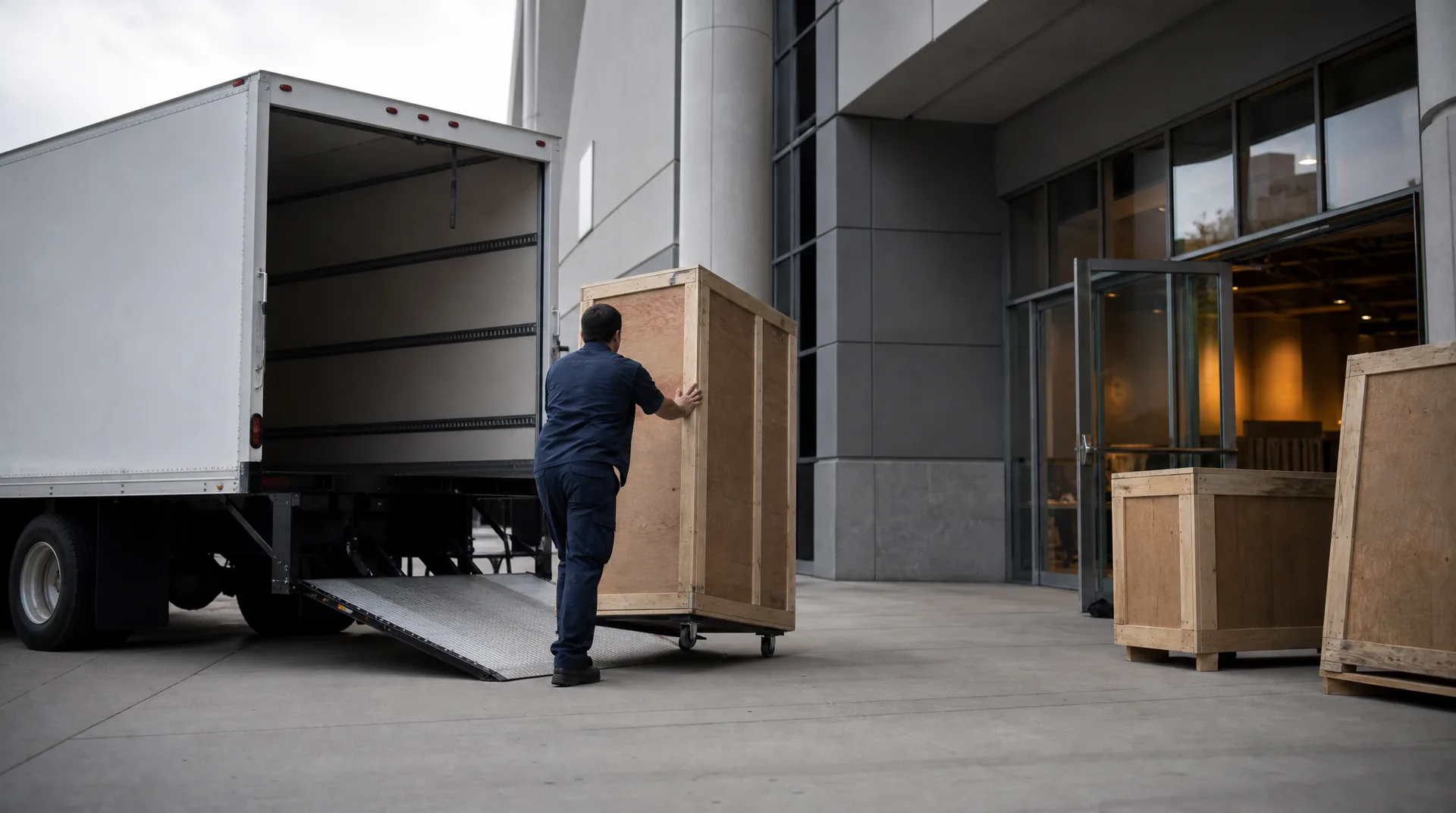
Most freight has a delivery date. Trade show freight has a delivery window, measured in hours, at a dock that will not exist next week.
That is the real difference. The show floor opens when it opens. Miss your move-in window and the booth sits in a marshaling yard while your slot on the floor goes empty, and no amount of speed after that buys the time back.
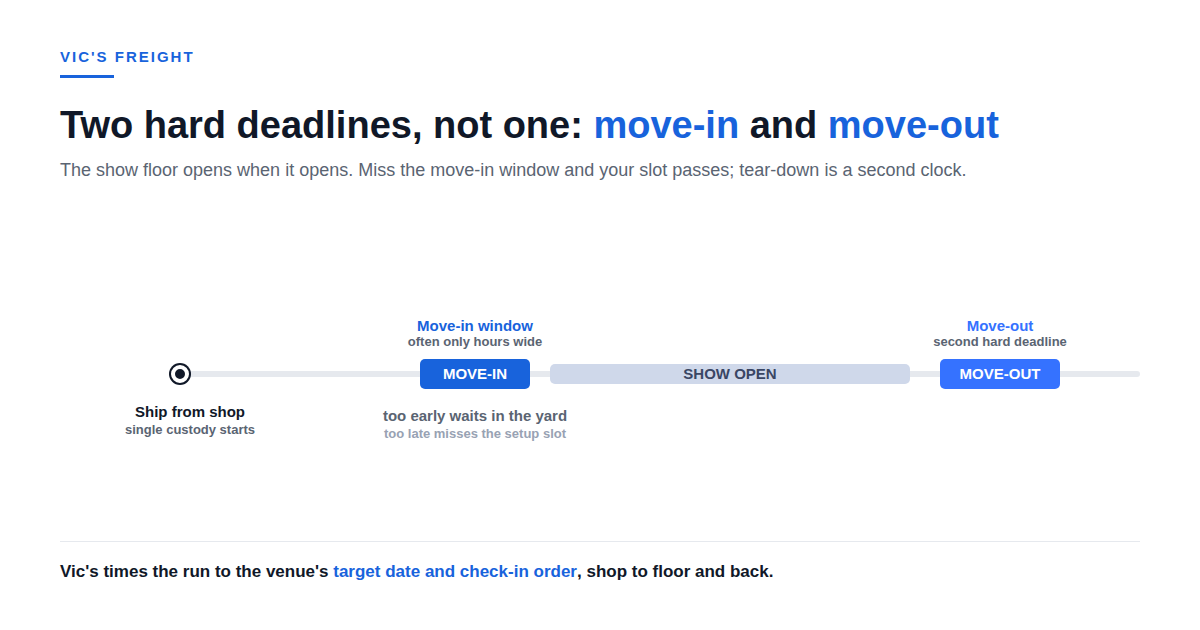
What to think about when the deadline is the show floor
Three things separate an event move from a normal rush shipment:
- The move-in window is the deadline, not the day. Venues run exhibition-industry move-in schedules: a target date and a check-in order through a marshaling yard, and arriving early can mean waiting just as much as arriving late. The move is timed to the window, not just pointed at the city.
- The exhibit usually cannot be re-handled. Booths, displays, and demo equipment are high-value and built to a spec, so the fewer hands and terminals between the shop and the floor, the less can go wrong on the way, which is the same logic behind why expedited removes the terminal step.
- Move-out is a second deadline. When the show ends, the venue wants the floor clear on its own clock, and the return leg has to be planned as tightly as the delivery. A move that only solves the front half leaves the freight stuck at the back.
A late pallet is a problem. A booth that misses its move-in window is a slot on the floor you paid for and did not get.
A move-in timeline, start to finish
Work it backward from the show, not forward from the shop. The venue publishes a target move-in date and a check-in time, and everything else is set by that. The truck has to reach the marshaling yard inside its window, clear check-in, and get to the assigned dock in the order the venue is calling crates. Leave the shop too late and you miss the slot. Leave too early and you pay to sit in a yard waiting for your number.
So the plan starts with the target date and counts back through transit time, the marshaling buffer, and the pickup. A same-day or team run gets built when the shop’s ready date and the venue’s window are too close together for a standard schedule. The point is that the delivery is engineered to land inside a few hours, not simply dispatched fast and hoped into place.
When the show closes, the clock starts again
Move-out is where a lot of event freight falls apart, because everyone plans the delivery and nobody plans the return. The venue wants the hall empty on a fixed schedule, often the same night the show closes, and the truck has to be there and ready, not booked the next morning. If the exhibit is heading straight to the next show, the return leg is its own timed move with its own window. Planning it up front is the difference between a clean exit and a crate stranded on a loading dock after everyone has gone home. The venue does not wait, and the next show on the calendar does not move its date because your freight is still sitting at the last one.
What usually goes wrong
The failures are predictable, which is what makes them avoidable. A truck shows up before its window and gets sent to the marshaling yard to wait, and the shipper pays for the hours it sits. A driver misses the check-in order and drops to the back of the line behind every crate that arrived on time. An exhibit rides through a terminal it should have skipped and arrives with a corner crushed the day before the doors open. Or the delivery goes perfectly and nobody booked the move-out, so the crate sits on a dock after the hall goes dark.
Every one of those traces back to the same thing: the move was treated as a fast shipment instead of a timed event. Build it around the window on both ends, and the yard, the check-in order, and the return leg stop being surprises. That is the whole job on trade show freight, and it is why the plan matters more than the mileage.
What this looks like in practice
- An exhibit that has to hit a two-hour move-in window at a convention center, dispatched to the venue’s target date and check-in order rather than just sent fast.
- A high-value display or demo unit that cannot ride through terminals changing hands. One vehicle, one driver, straight from the shop to the floor.
- Tear-down at the close of the show, where the venue wants the floor clear that night. The truck is planned for the move-out, not scrambled for after the fact.
Where Vic’s fits
Trade show logistics is one of the verticals Vic’s is built for: dedicated ground timed to the move-in window and the move-out across the US and Canada, kept in one set of hands from the shop to the floor and back. The deadline is the show, and the whole move is built around it.
Get an instant quote. Tell us the venue, the move-in window, and what you are bringing, and we will get it to the floor on time and out clean when the show closes.