How to Choose an Expedited Carrier (Before You Need One)
Most shippers vet an expedited carrier the week they urgently need one, which is the worst possible time. Here are the questions that separate a real carrier from one that just quotes fast.
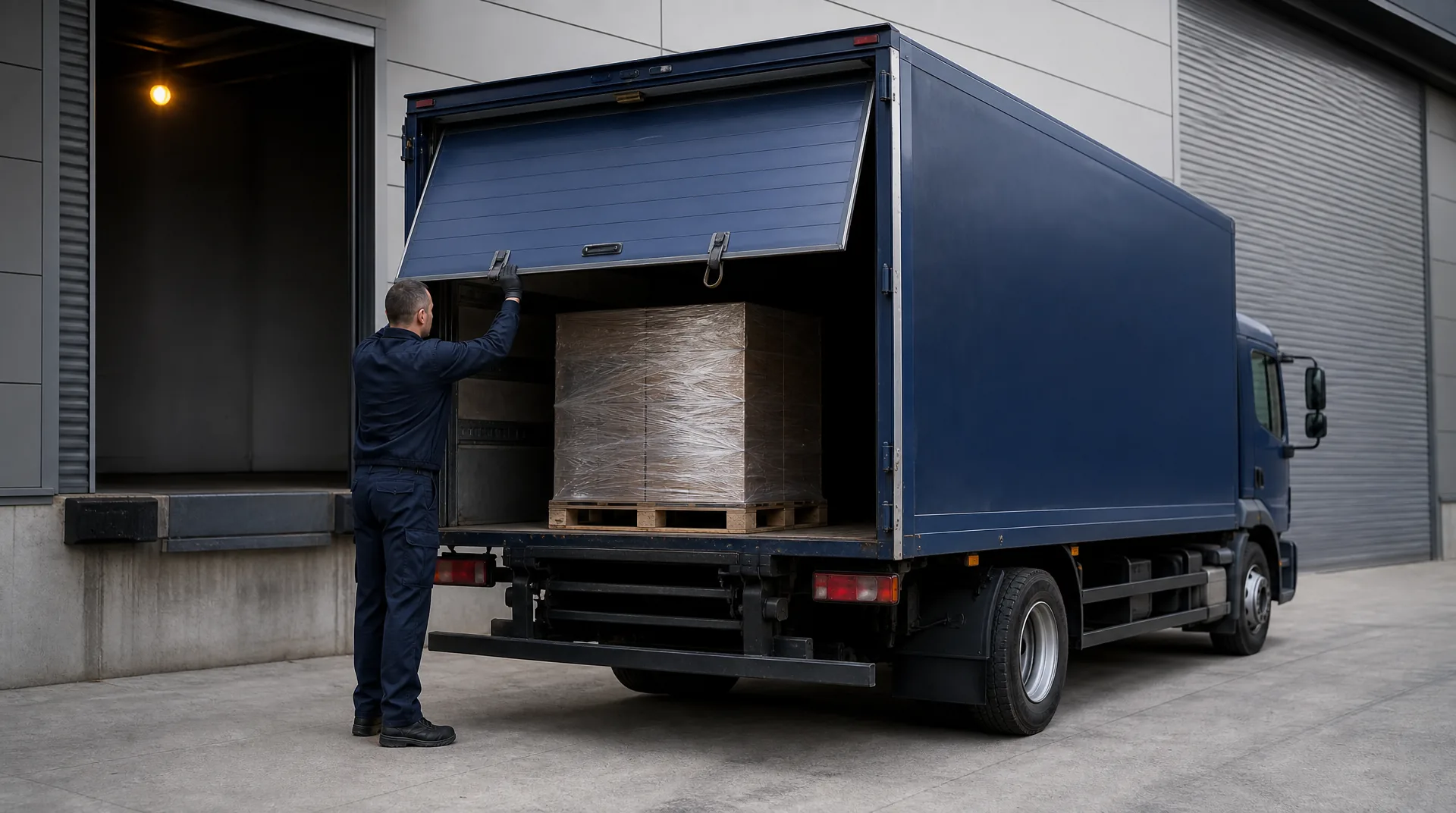
Most shippers pick an expedited carrier the same week they urgently need one, which is the worst time to be checking whether the company on the phone can actually do the job.
The gap that matters is simple: a broker sources a truck from a network, a carrier controls its own. When a deadline is real, that difference decides whether your shipment makes the window or waits on someone else’s availability.
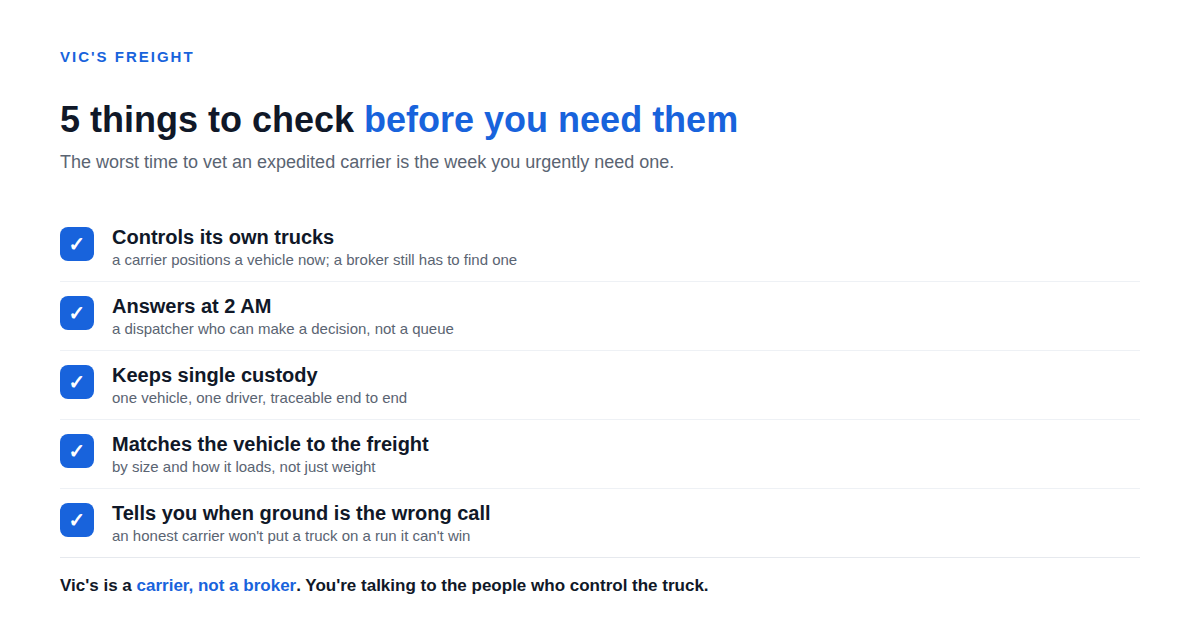
What to check before you need them
A few questions separate a carrier that can deliver under pressure from one that just quotes fast. Ask them while nothing is on fire, and the answers tell you exactly who to call when something is.
- Do they control the trucks, or broker them out? A carrier working backward from your deadline can position a vehicle now. A broker still has to find one, and every minute spent sourcing is a minute off your delivery window.
- Who picks up at 2 AM? Time-critical freight does not keep business hours. You want a dispatcher who can make a decision on the spot, not a queue and a callback in the morning when the load is already late.
- Is the shipment kept in single custody? Every handoff is a place it can slip. One vehicle and one driver keep it traceable end to end, and keep the accountability on one company instead of spread across a chain nobody owns.
- Can they match the vehicle to the freight? The right van, sprinter, or truck depends on size and how it loads, not just weight. A carrier that asks about dimensions and dock access before it quotes is one that has done this before.
- Will they tell you when ground is the wrong call? An honest carrier will say when standard freight or even air is the better answer instead of putting a truck on a run it cannot win. The one who says yes to everything is the one who leaves you stranded halfway.
Why the broker-versus-carrier line matters
When a time-critical request comes in, the right carrier is already working backward from the delivery deadline: what vehicle, from where, makes this window. Fleet positioning, driver availability, and routing happen in parallel because the carrier controls all three. A broker has to source capacity first, and that sourcing step is exactly where the time goes when the pressure is real. It is the same reason the honest answer sometimes points the other way, like when ground actually beats air.
A network can still come through. It just has more moving parts between your deadline and the wheels, and every extra part is one more place the plan can stall.
What vetting looks like in practice
Say you run a plant that loses a shift if a part shows up late. You do not wait for the breakdown to start calling around. You find one carrier now, ask the five questions above, and put a real shipment on them while the stakes are low. You watch how they quote, whether the dispatcher actually picks up, whether the driver they send matches the truck they promised, and whether the tracking updates you were told about show up on time.
That first run tells you more than any sales call ever will. A carrier that communicates on a routine load will communicate on the one that matters. One that goes quiet on a slow Tuesday will go quiet at 2 AM. By the time a real emergency lands, you already know which number to dial, and the vetting is behind you instead of ahead of you.
Red flags worth walking away from
Some answers should end the conversation. A carrier that will not tell you straight whether it owns the truck is usually brokering it. One that quotes a hard number before asking a single question about the freight is guessing. A dispatcher who cannot give you a direct line, or who routes everything through a general inbox, is not built for the calls that come in after hours. And anyone who promises they can beat every deadline without knowing the lane is selling confidence, not capacity. Watch how they handle the question they cannot answer, too: a carrier that says it will check and calls you back is being straight, while one that talks past it is hoping you will not ask again.
None of this takes long to check. It takes a few honest questions and one test run. The shippers who never get burned are the ones who asked them early, while the answers still had time to matter.
Set it up before the emergency
The shippers who lose the least treat expedited capacity as a standing relationship, not a last-minute search. Confirm the carrier’s operating authority and insurance are active, set tracking expectations up front, and know who to call before the shipment that cannot wait lands on your desk. Industry bodies like the American Trucking Associations are a useful reference for what a professional, well-run carrier looks like. Get the paperwork, the contacts, and the rate structure agreed while there is still time to read them. By the time you need it, the vetting should already be done.
Where Vic’s fits
Vic’s is a carrier, not a broker. We run our own dedicated vehicles across the US and Canada, dispatch around the clock, and keep every shipment in one set of hands from pickup to delivery. When you call, you are talking to the people who control the truck, not sourcing one.
Get an instant quote. Tell us the lane and the deadline, and we will tell you straight whether we are the right carrier for it.