Air Cargo Costs: Chargeable Weight and What Drives the Price per Pound
Short answer
Air cargo is billed on chargeable weight: the actual weight or the dimensional weight, whichever is higher. Dimensional weight is the volume of the piece divided by the carrier’s divisor, so a light, bulky crate pays for the space it takes on the aircraft. The rate per pound then depends on the weight break, the service level and the commodity, and the invoice adds fuel, the 6.25% federal tax on air transportation of property, and anything outside the airport to airport rate, such as pickup, delivery and storage.
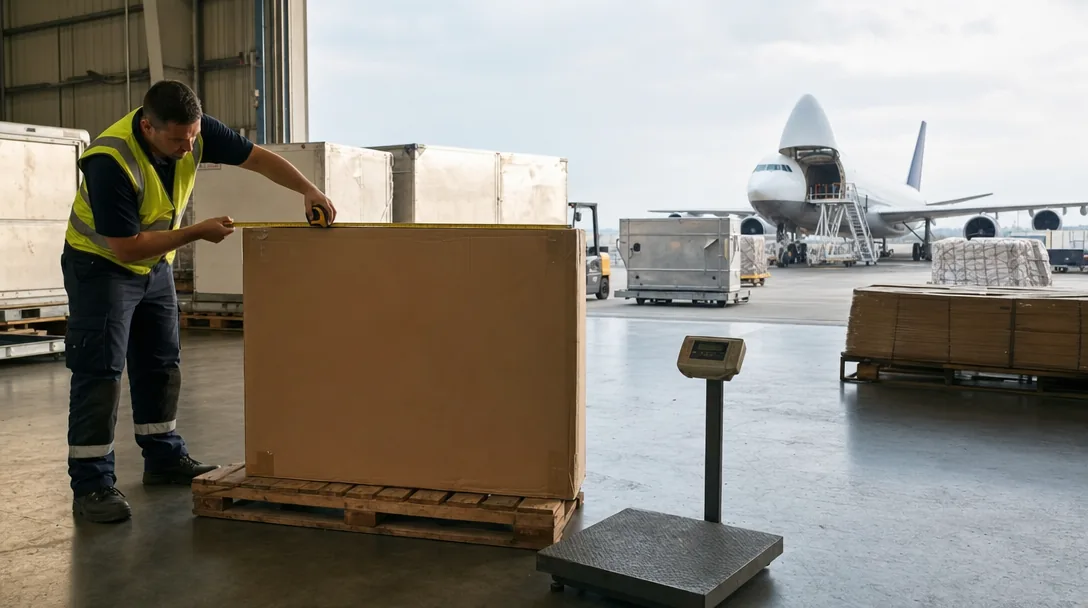
You weigh a crate at 150 pounds, ask for an air quote, and the airline bills you for more than three times that. Nothing is wrong with the scale. Air carriers sell space as well as lift, and the number they charge on is not always the number on your scale ticket. Once you know how that number is built, you can read a quote, compare two of them fairly, and often cut the bill before the freight leaves the dock.
What is chargeable weight in air cargo?
Chargeable weight is the weight the rate is multiplied by. Carriers set it as the higher of two figures: the actual gross weight of the shipment, and its dimensional (or volume) weight. Everts Air Cargo’s Conditions of Contract put it plainly for oversized freight: it is rated on “whichever is greater, the actual rounded weight or dimensional weight of the shipment.”
Dense freight, like metal parts or bottled liquids, usually bills on actual weight. Light, bulky freight, like foam, lampshades, empty containers or a small part packed in a big crate, usually bills on dimensional weight. The same rate per pound can produce very different invoices for two shipments that weigh the same.
How is dimensional weight calculated?
Multiply length by width by height, then divide by the carrier’s dimensional divisor. The divisor is the volume the carrier treats as one unit of weight, and it is set by each carrier and service, so it is not the same everywhere. Ask which one your quote uses.
The conditions of carriage published by AIRDO, for example, count 6,000 cubic centimeters as one kilogram, measure each piece at its longest points, and round fractions up. Converted, 6,000 cubic centimeters per kilogram works out to about 166 cubic inches per pound. A carrier with a larger divisor charges less dimensional weight for the same box; a smaller divisor charges more.
Two details catch shippers out:
- Longest points, not the nominal size. A bulge, a handle or a pallet that sticks out past the carton counts. Measure the piece as it will sit on the scale.
- Rounding goes up. Under AIRDO’s rules, fractions are rounded up in both the volume weight and the actual weight, so a little extra packaging can add to the bill.
A worked example: one bulky crate
A machine part weighs 150 pounds packed. It ships in a crate on a pallet measuring 48 by 40 by 40 inches. Using the AIRDO method:
- Volume: 121.92 x 101.6 x 101.6 cm, about 1,258,527 cubic centimeters.
- Dimensional weight: 1,258,527 / 6,000 = 209.75, rounded up to 210 kg, about 463 lb.
- Actual weight: 150 lb, or 69 kg after rounding up.
- Chargeable weight: 210 kg. You pay for about 463 pounds, not 150.
Now suppose the part fits in a crate 28 inches tall instead of 40. The same math gives 880,969 cubic centimeters, or 147 kg, about 324 lb. That is still more than double the actual weight, but it is roughly 140 pounds less to pay for, from a change in crate height alone.

Pricing a Bulky Shipment Against a Deadline?
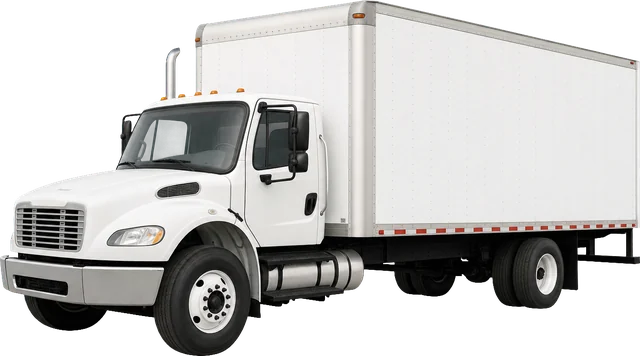
Vic’s runs cargo vans to straight trucks across the US and Canada, one shipment per vehicle, with dispatch that answers 24/7. Send the dimensions, the weight and the deadline, and compare a dedicated truck with your air quote.
Get an instant quote →How do weight breaks and the minimum charge change the price per pound?
Air rates are not one price per pound. Carriers publish rates by weight break, and the rate per pound falls as the shipment gets heavier. Everts publishes general rates for breaks “usually 1, 100, 500, 1,000 and 5,000 pounds,” and charges the lower of two numbers:
- the chargeable weight at the rate for its own break, or
- the minimum weight of the next break at that break’s lower rate.
In the example above, 463 pounds sits just under a 500 pound break. Depending on the two rates, paying for 500 pounds at the lower rate can cost less than paying for 463 at the higher one, and the carrier applies whichever is cheaper. The same rule explains why adding a small second piece to an existing shipment sometimes barely moves the total.
At the other end, there is a minimum charge per shipment. A small box can cost as much as a much heavier one, which makes small shipments look very expensive per pound. If you ship several small pieces to the same destination, one consolidated shipment usually beats several minimum charges.
What else ends up on an air cargo invoice?
The chargeable weight times the rate is only the base line. Everts sums up its own calculation as “weight x per pound rate x exception tariff + current fuel surcharge x tax = total.” The common additions:
- Service level. Priority rates cost more than general rates. Where Everts has no published priority rate between two points, it charges 160% of the general rate, minimum charge included. Even then, it states that priority “is not a reservation” and it does not guarantee a particular flight. General shipments travel space available.
- Commodity exceptions. Bulky or special handling items can be rated at a percentage of the base rate. Everts lists appliances, household goods and cabinets at 150% of tariff, for example.
- Fuel surcharge. A variable charge tied to fuel costs at the time of service. It moves, so a quote from last month may not hold.
- Federal excise tax. 26 U.S.C. 4271 taxes amounts paid for the air transportation of property at 6.25%, paid by the person making the payment.
- Declared value. Carriers limit their liability unless you declare a higher value, and charge extra when you do. Cargo insurance is a separate product.
- Storage. Freight left at the destination airport past the free period is charged by weight and by day. Everts starts after three days.
- Everything off the airport. Everts states that its rates “apply from airport to airport only.” Pickup at your dock, the drive to the airport, and delivery from the destination airport are separate legs, quoted separately unless someone builds them into a door to door price.
Timing matters as well. Federal law (49 U.S.C. 44901(g)) requires screening of all cargo carried on passenger aircraft, and carriers set cutoffs for receiving freight before departure. Everts wants priority shipments at its facility no later than three hours before the flight. Miss the cutoff and the cheapest flight is gone.
How can you lower the cost of an air shipment?
- Fit the packaging to the freight. As the example shows, the crate height alone moved the bill by about 140 pounds. Measure the packed piece before you book, not the product.
- Look at the next weight break. If you are just under one, ask for the rate at the break. Combining shipments to the same destination can move you onto a lower rate.
- Pay for priority only when the deadline needs it. If the freight can travel space available and still make it, general rates cost less.
- Ask what the quote includes. Fuel, tax, screening, pickup, delivery and storage. Two quotes are only comparable on the same scope.
- Compare door to door, not per pound. The per pound rate leaves out the trucking at both ends and the hours spent getting to and from the airport.
When is flying not the best option?
For a bulky, light shipment, dimensional weight can make air expensive at exactly the moment it is needed most. Sometimes a dedicated ground vehicle that leaves as soon as it is loaded can arrive about as fast once you add the drive to the airport, the cutoff, the flight and the recovery at the other end. We compare those options hour by hour in next flight out vs air charter vs expedited ground, and an urgent aircraft part follows a different pricing logic again, set by the hour it lands rather than by the pound, as covered in AOG parts shipping costs.
When air is the right answer, a carrier or forwarder still needs the dimensions, the weight, the commodity, the pickup and delivery addresses and the deadline to quote it. Vic’s handles air freight through a network of air freight carriers.
Frequently asked questions
What is chargeable weight in air freight?
It is the weight the carrier multiplies by the rate: the higher of the shipment’s actual gross weight and its dimensional weight.
How do you calculate dimensional weight for air freight?
Multiply length, width and height, measured at the longest points, and divide by the carrier’s divisor. Under AIRDO’s conditions, for example, 6,000 cubic centimeters count as one kilogram, about 166 cubic inches per pound. Divisors differ by carrier and service, so check the one on your quote.
Why is my air freight quote based on more weight than the shipment weighs?
Because the shipment is light for its size. When the dimensional weight is higher than the actual weight, the carrier charges on the dimensional weight. Smaller packaging is usually the fastest way to bring it down.
Does an air cargo rate include pickup and delivery?
Usually not. Carrier rates commonly apply from airport to airport only, so pickup, delivery, storage and insurance are separate unless the quote is door to door.
If the freight is bulky and the deadline is tight, get both numbers before you decide. Vic’s runs cargo vans to straight trucks across the US and Canada, one shipment per vehicle, with dispatch that answers 24/7. Get an instant quote with the dimensions, the weight and the time it has to arrive.