Freight Insurance vs Carrier Liability: What Covers a Damaged Expedited Load

Short answer
Carrier liability is what the trucking company owes you by law when freight is lost or damaged in its care, but carriers are allowed to cap it, often at a set amount per pound. Freight insurance (cargo insurance) is a separate policy you buy to cover the value above that cap, and the losses a carrier is not liable for at all. On light, valuable freight the gap between the two can be most of the invoice, so check the carrier’s limit against the value of the load before it ships, not after.
A pallet of new control panels arrives with a forklift hole through the side. The invoice says $40,000. The carrier accepts the claim and offers $2,500. Nobody is cheating anyone here. The carrier is paying exactly what its tariff says it owes, and the shipper is learning, too late, that carrier liability and insurance are two different things. Here is how each one works and how to tell, before booking, which one you actually need.
What does carrier liability cover?
For interstate truck freight, the starting point is the federal rule known as the Carmack Amendment, 49 U.S.C. 14706. It makes the carrier liable for “the actual loss or injury to the property” it carries, and the obligation exists even if no bill of lading was issued.
The Supreme Court described the rule in Missouri Pacific v. Elmore & Stahl: a carrier is “not an absolute insurer,” but it is liable for damage unless it shows the cause was an act of God, the public enemy, the act of the shipper, public authority, or the inherent vice or nature of the goods. As the shipper, you make your case by showing three things: the freight was delivered to the carrier in good condition, it arrived damaged, and what the damage cost. The burden then moves to the carrier to prove it was not negligent and that one of those five causes applies.
That is a strong position for a shipper. It also has two weak points: the exceptions, and the amount.
How do carriers limit what they pay?
The same statute lets a carrier set rates under which its liability is limited to a value declared by the shipper or agreed in writing, as long as that value is reasonable. The carrier also has to give you a copy of the rules behind your rate if you ask for it. In practice, the limit lives in the carrier’s rules tariff or in your contract and rate confirmation.
Three large LTL carriers publish theirs, and the defaults for new goods look like this:
- Old Dominion (ODFL 100-Q, Item 594): the lowest of invoice value, replacement cost, or $5.00 per pound up to $50,000 per occurrence. Used, reconditioned or refurbished goods drop to $0.10 per pound, up to $10,000.
- FedEx Freight (FXF 100-Y, Item 420): actual invoice cost up to $25.00 per pound per package or $100,000 per incident, whichever is lower. Used or reconditioned goods: 50 cents per pound per package, up to $10,000. The weight of pallets, skids and packaging does not count.
- TForce Freight (UPGF 102-T, Item 166): the lesser of $25.00 per pound per package, $100,000 per shipment, or invoice value, with separate limits for freight moving under class exception ratings.
All three also point to commodity lists and NMFC released value provisions that can set a lower limit for specific goods. The cap is the ceiling, not the payout: you still recover only the actual loss, up to that ceiling.
What this looks like on a real shipment
Take the control panels from the opening: 500 pounds of new goods, not counting the pallet, invoiced at $40,000, with no special limit for the commodity. If the whole load is destroyed:
- Under the ODFL default, 500 pounds at $5.00 is $2,500. The shipper is short $37,500.
- Under the FedEx Freight default, 500 pounds at $25.00 is $12,500. The shipper is short $27,500.
Now make it 500 pounds of used equipment worth the same $40,000. ODFL’s used goods limit gives $50, and FedEx Freight’s gives $250. Same weight, same damage, and the cap is a rounding error against the invoice.
Per pound limits punish freight that is valuable for its weight: electronics, medical devices, precision parts, samples. A pallet of bagged gravel and a pallet of circuit boards can weigh the same and get the same cap. If you divide the invoice value by the shipping weight and the result is well above the carrier’s per pound figure, you are carrying the difference yourself unless you do something about it.
Is excess declared value the same as freight insurance?
No, and the carriers say so in writing. Most offer a way to buy a higher limit for an extra charge, but ODFL’s tariff (Item 574) states that “additional cargo liability is NOT and will not be considered insurance for the cargo,” and FedEx Freight’s Item 420 says the same about its excess coverage. What you are buying is a higher ceiling on the carrier’s liability. The rest of the tariff, including the carrier’s defenses (act of God, inherent vice, the shipper’s own fault), still applies.
It also has to be requested correctly. ODFL requires the request in writing, with the covered value on the original bill of lading, before the shipment is tendered, and states that writing only a “Declared Value” on the bill does not count as a request. FedEx Freight requires excess coverage to be written on the original bill of lading and will not accept requests to add or change a shipment’s valuation. A value scribbled in the wrong box, or a phone call after pickup, usually leaves you at the default limit.

Moving High-Value Freight on a Deadline?
Vic’s runs cargo vans to straight trucks across the US and Canada, one shipment per vehicle, with dispatch that answers 24/7. Tell us what the freight is worth when you request a quote, and ask for the liability terms in writing before you book.
Get an instant quote →Doesn’t the carrier’s own insurance cover my freight?
Not the way most shippers assume. The insurance every for-hire carrier must file with FMCSA under 49 CFR 387.301 is public liability: it pays judgments for bodily injury or death, or for loss of or damage to the property of others, caused by negligent operation of the truck. The minimums in 387.303 are $300,000 for a fleet of vehicles under 10,001 pounds and $750,000 for non-hazardous freight in heavier vehicles. Those numbers are about the public on the road.
The same regulation requires a cargo insurance filing only from household goods movers. So a carrier’s authority and its filed insurance tell you it meets the public liability minimum. They do not tell you whether it carries cargo coverage or how much. Ask for a certificate that lists cargo coverage and its limit. Even then, your claim is against the carrier and is measured by its liability terms, not by the size of its policy.
When should a shipper buy its own cargo insurance?
Your own cargo policy pays on its terms, not on the carrier’s tariff, and depending on the policy it can cover losses the carrier is not liable for at all. It is worth pricing when:
- the value per pound of the freight is well above the carrier’s limit, as in the example above;
- the goods are used, refurbished or on a special limited liability list, where carrier limits fall sharply;
- the loss you worry about could fall under a carrier defense: an act of God, an order from public authority, or damage that comes from the nature of the goods themselves;
- a single damaged shipment would cost you more than the freight bill, such as a production part that stops a line.
Read any policy for exclusions, the deductible and whether it pays invoice value or replacement cost. A policy does not replace the carrier paperwork: the bill of lading, the delivery receipt and a timely claim still matter.
How does a dedicated expedited truck change the picture?
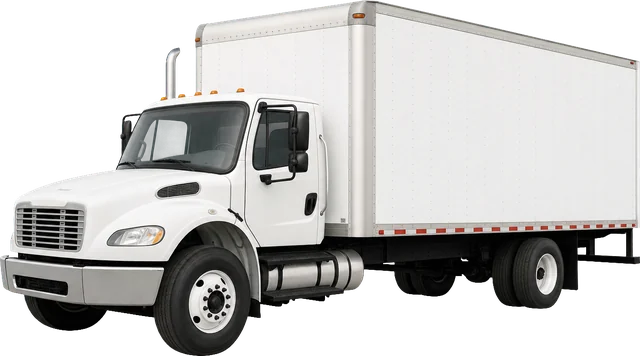
The legal framework is the same. What changes is how the freight travels. On an LTL network, a pallet is loaded, unloaded and reloaded at terminals along the way, next to other shippers’ freight. On a dedicated expedited move, your shipment is the only one on the vehicle, loaded at your dock and unloaded at the receiver. If you are already weighing declared LTL against a dedicated truck for a tricky delivery, our guide to limited access delivery walks through when each one fits.
The liability terms still come from the carrier’s rate confirmation or contract, so ask for them in writing whichever service you choose. And keep damage and delay apart: a missed delivery date is not cargo damage. As our breakdown of LTL transit times shows, the remedy for a missed guaranteed date can be as small as a refund of the guarantee charge.
What to do before the freight leaves your dock
- Ask for the liability terms in writing. The per pound limit, the per shipment cap, and any commodity exceptions that apply to your goods.
- Do the arithmetic. Shipping weight of the goods (without pallets) times the limit, against the invoice value.
- Close the gap the right way. Request excess liability exactly as the tariff or contract requires, before tender, or buy cargo insurance, or both.
- Document condition at pickup. Photos of the packed freight and a clean bill of lading support the first part of your case: that it left in good condition.
- Know the next steps. If damage turns up after the receiver signs, our guide to concealed freight damage covers the notice windows and evidence, and critical freight salvage explains what the carrier must do with damaged freight and how salvage affects your claim.
Frequently asked questions
Is carrier liability the same as cargo insurance?
No. Carrier liability is the carrier’s legal obligation for loss or damage in its care, usually capped by its tariff or contract. Cargo insurance is a policy that pays on its own terms, including value above the carrier’s cap.
How much does a carrier pay for damaged freight by default?
It depends on the carrier’s tariff or your contract. In three published LTL tariffs, defaults for new goods run from $5.00 per pound (ODFL, up to $50,000) to $25.00 per pound (FedEx Freight and TForce, up to $100,000), and never more than the actual loss.
Does writing a declared value on the bill of lading raise the carrier’s liability?
Not by itself. ODFL, for example, requires a written request for additional liability with the covered value, made before tender, and states that a declared value notation alone does not trigger it. Follow the exact procedure in the carrier’s tariff or contract.
Does a carrier’s FMCSA insurance cover my cargo?
The required filing is public liability, for injury and damage to others caused by the truck. Cargo insurance filings are required only from household goods carriers, so ask any other carrier for a certificate showing cargo coverage and its limit.
If the freight is worth more than a per pound cap would ever pay, settle the coverage before you book. Vic’s runs cargo vans to straight trucks across the US and Canada, one shipment per vehicle, with dispatch that answers 24/7. Get an instant quote and tell us the value, the weight and the deadline.