Freight Class in Expedited Shipping: When It Matters

Short answer
Freight class is how less-than-truckload (LTL) carriers price shared freight. If your urgent shipment moves as expedited or guaranteed LTL, it still rides the LTL network, so its class still matters and a wrong class can lead to a rate adjustment. If you book a whole vehicle for the shipment, ask how the price is built. At Vic’s it comes from the vehicle the freight needs, the distance and the deadline, not from a tariff sheet, and the dimensions and weight decide which vehicle that is. Either way, measure and weigh the freight before you ask for a quote.
Your shipment has to be there tomorrow, and the quote request asks for a freight class. Do you need one? Does class still set the price when the freight is urgent?
It depends on how the freight moves. Class belongs to the shared LTL network. Once a shipment gets a vehicle to itself, other numbers usually take over. This page explains what freight class is, how the density scale changed in 2025, and which expedited options still depend on it.
Freight class in expedited shipping at a glance
| Question | Expedited or guaranteed LTL | A vehicle booked for your shipment |
|---|---|---|
| How it moves | Through LTL terminals with other shippers’ freight, at a higher service level | Picked up and driven to the receiver, with no other freight on board |
| Does freight class apply? | Yes, like any LTL shipment | Not at Vic’s; elsewhere, ask how the quote is built |
| What sets the price | Class and weight, plus the service level you pick | At Vic’s: the vehicle the freight needs, the distance and the deadline |
| What the carrier needs from you | Accurate class, weight and dimensions | Piece count, dimensions, weight, pickup and delivery details |
| Risk of a wrong number | Reclass or reweigh, with a rate adjustment | Wrong vehicle size, which can mean a new quote or a delay |
What is freight class?
Freight class is a number given to a commodity under the National Motor Freight Classification (NMFC), published by the National Motor Freight Traffic Association (NMFTA). According to NMFTA, each product or commodity gets a class from 50 to 500, and the NMFC exists to keep LTL shipping consistent and fair.
NMFTA bases the class on four characteristics:
- Density: how heavy the freight is relative to the space it takes up.
- Handling: how easy it is to move across a dock and into or out of a trailer.
- Stowability: how well it can be stowed in a trailer for transport.
- Liability: how likely the freight is to cause damage or be damaged.
Denser freight that is easy to move gets a lower class, and a lower class costs less to ship. Low-density, fragile or awkward freight gets a higher class.
What changed in the 2025 NMFC update?
In Docket 2025-1, NMFTA amended NMFC items to use a standard 13-subprovision density scale, with the changes taking effect on July 19, 2025 (NMFTA Disposition Bulletin 1371). For those items, class now follows density in pounds per cubic foot instead of a commodity description. Old Dominion describes the same change: the new scale replaced an 11-tier system and added classes 50 and 55 to the density scale.
The scale in the bulletin:
| Density (pounds per cubic foot) | Class |
|---|---|
| Less than 1 | 400 |
| 1 but less than 2 | 300 |
| 2 but less than 4 | 250 |
| 4 but less than 6 | 175 |
| 6 but less than 8 | 125 |
| 8 but less than 10 | 100 |
| 10 but less than 12 | 92.5 |
| 12 but less than 15 | 85 |
| 15 but less than 22.5 | 70 |
| 22.5 but less than 30 | 65 |
| 30 but less than 35 | 60 |
| 35 but less than 50 | 55 |
| 50 or greater | 50 |
Two cautions. First, the scale applies to the items that were amended. The same bulletin keeps other items on their existing provisions, so look up your own item number before you assume density decides it. Second, the work continues. NMFTA’s note on Docket 2026-2, posted on October 9, 2026, says more items are moving to the full density scale, while some, such as ladders and shades or blinds, are not moving at this time. A class you used last year may not be the class today.
How do you work out density?
Density is the weight of the packaged freight divided by the space it takes up, in cubic feet. Measure the outside of the shipment as it will be handed over, pallet included, at the longest and widest points.
- Multiply length by width by height in inches.
- Divide by 1,728 to get cubic feet.
- Divide the total weight in pounds by the cubic feet.
Some worked examples, using the scale above (arithmetic only, not a class ruling for any product):
- Four pallets, each 48 by 40 by 48 inches, 1,200 lb in total. Each pallet is 53.3 cubic feet, so the shipment is about 213 cubic feet. 1,200 divided by 213 is about 5.6 pounds per cubic foot, which falls in the 4 to under 6 band: class 175.
- The same four pallets at 2,400 lb. Density doubles to 11.25 pounds per cubic foot: class 92.5.
- One crate, 48 by 40 by 60 inches, 600 lb. That is about 66.7 cubic feet and 9 pounds per cubic foot: class 100.
The first two shipments take the same floor space, but on a density-based item the lighter one lands in a much higher class. That is why light, bulky freight can cost more per pound in LTL.
Does freight class matter for expedited shipping?
“Expedited” covers different services, and class matters in some of them and not in others.
Expedited LTL and guaranteed LTL. These are the LTL network run faster or with a delivery-date promise. The pallets still go through terminals with other shippers’ freight, as covered in expedited LTL vs guaranteed LTL vs dedicated. Class is part of how LTL carriers calculate rates, so expect to give a class for these services, and expect it to be checked.
A vehicle booked for the shipment. In dedicated or exclusive-use expedited freight, your shipment gets a cargo van, sprinter, box truck or straight truck to itself and goes straight to the receiver. At Vic’s, this is how expedited freight is priced: not from a tariff sheet or a per-pound rate, but from the vehicle the freight needs, the distance and the deadline, as explained in what drives the cost of expedited freight. Vic’s quote form has no freight class field, and the vehicle is chosen from piece count, dimensions and weight.
Not every carrier prices a dedicated truck the same way. If a quote for a “dedicated” or “exclusive use” truck asks for a class, ask how the price is built.
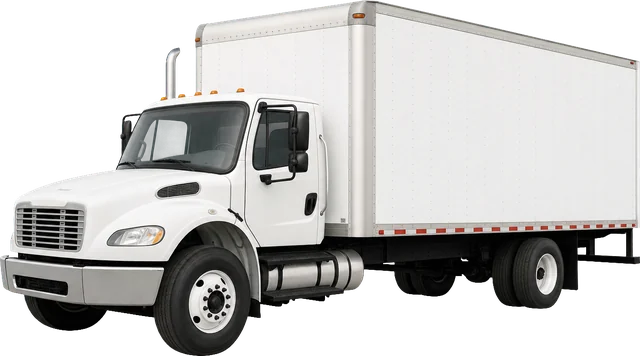

Urgent Freight on Its Own Vehicle
From cargo van to straight truck, one shipment per vehicle, priced by the vehicle it needs. Send the pieces, dimensions, weight and deadline.
Get an instant quote →What happens if the class on the bill of lading is wrong?
In LTL, the class and weight on the paperwork can be checked. If the freight measures or weighs differently from the paperwork, it can be reclassed or reweighed and the charges changed. Old Dominion says noncompliance with the new NMFC items or subprovisions could lead to adjustments in freight rates, clerical fees and operational disruptions (ODFL).
On a vehicle booked for the shipment, the risk looks different. A wrong dimension or weight can mean the wrong vehicle arrives: a sprinter for freight that needs a box truck. That usually costs time, which is the one thing an urgent shipment does not have.
What this looks like in practice
Two light pallets for a trade show. Display panels on two tall pallets, light for their size. In LTL, low density puts them in a high class. Booked on a vehicle of their own, what matters is that the pallets fit the floor and the height of the van or truck being sent, so the height has to be right in the quote request.
A dense crate for a line that is down. One crate of machine parts, small and heavy. Its density puts it in a low class, and expedited LTL might look attractive on price. The question is the deadline: if it has to arrive the next morning without passing through terminals, a vehicle booked for that crate is the option to price.
A shipment that changed after the quote. The quote was for three pallets; the dock loads four. In LTL, the extra pallet means a new weight and density and possibly a new class. On a booked vehicle, it means checking that the vehicle still fits. Either way, call the carrier before pickup, not after.
What you can control
- Your measurements. Measure the outside of each piece as packed, pallet included, and weigh it. Density, class and vehicle size all come from these numbers.
- Your item number. If you ship LTL, check the current NMFC item and class for what you ship. The 2025 and 2026 dockets moved items to the density scale.
- Your packing. Stackable, standard pallets use less space. In LTL that can raise density and lower the class; on a booked vehicle it can mean a smaller vehicle.
- The service you ask for. Decide whether the freight can go through terminals or needs its own vehicle. How the two compare is covered in expedited LTL vs full truckload and dedicated and exclusive-use freight.
- The vehicle size. If you are not sure which vehicle the freight needs, see cargo van vs sprinter vs box truck and straight truck vs tractor-trailer.
Freight class answers one question: how to price freight that shares a trailer. When a shipment is urgent enough to get its own vehicle, the useful numbers are the dimensions, the weight and the deadline. Vic’s runs cargo vans, sprinters, box trucks and straight trucks, one shipment per vehicle. To price yours, get an instant quote and tell us the pieces, the dimensions, the weight and when it has to arrive.
Sources: NMFTA, National Motor Freight Classification overview and Disposition Bulletin 1371 (Docket 2025-1), and NMFTA’s Docket 2026-2 disposition note, read on 12 October 2026; Old Dominion Freight Line, NMFC class changes, read on 12 October 2026. Density examples are arithmetic on the published scale, not class rulings for any product.