Cargo Theft: What Shippers Should Check Before High-Value Freight Leaves the Dock
Short answer
Most cargo theft today is not a break-in. It is a release: freight handed to the wrong truck, or sent to the wrong address, because someone looked legitimate on paper. A shipper cannot stop every criminal, but it controls the moments where that release happens: who gets the load at the dock, how changes to a booking are confirmed, how long loaded freight sits, and how many hands it passes through on the way.
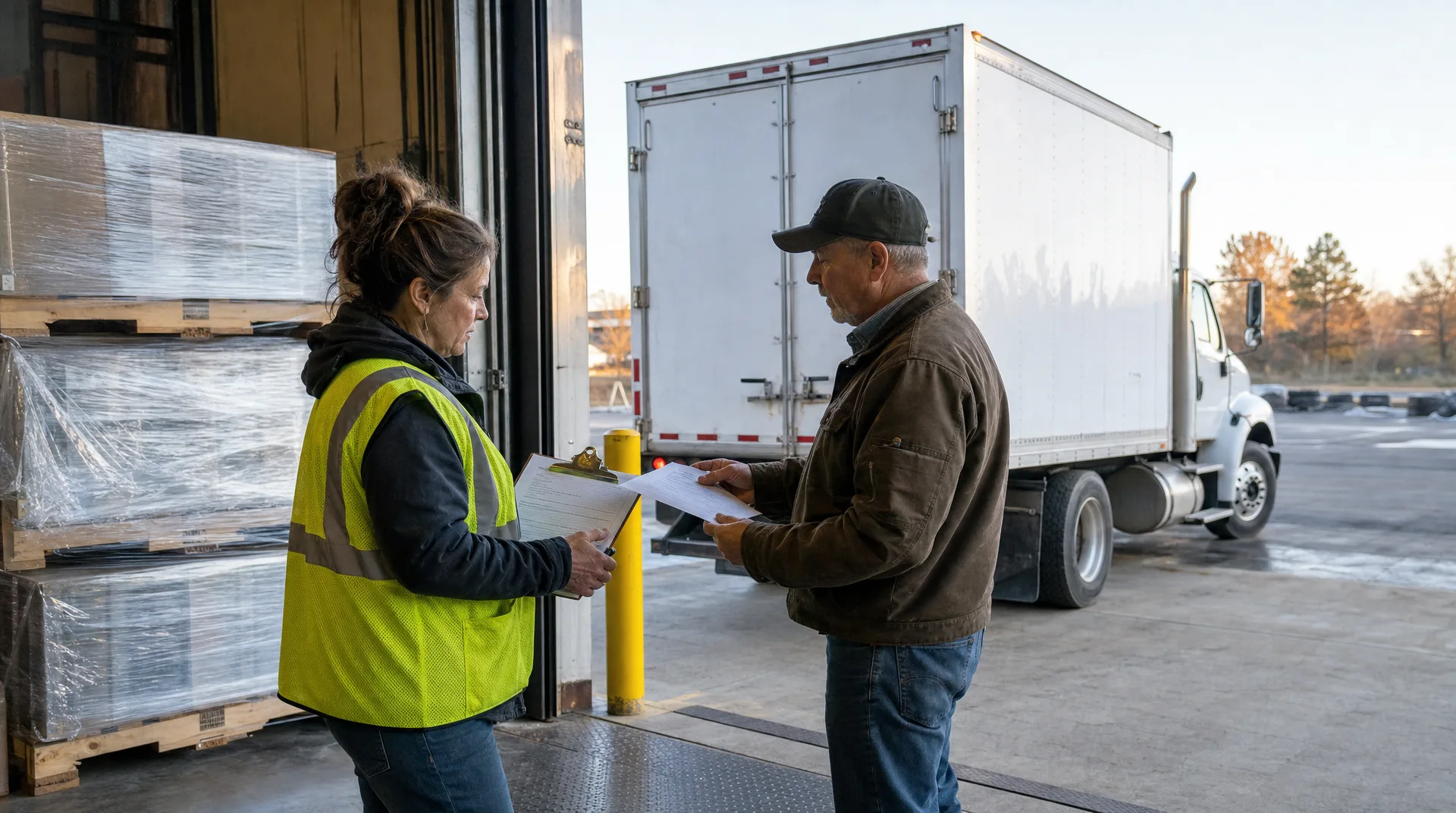
The truck at your dock has the right pickup number, a driver who knows the reference, and a story about why the carrier name on the door is not the one on your confirmation. Do you load it?
That is where a lot of cargo theft now gets decided. Not on a dark highway, but at the dock, in an inbox, or in a yard where a loaded trailer waits for Monday. Thieves have moved from grabbing whatever is parked to picking the shipment worth taking and finding the easiest way to have it handed over.
This page is for shippers moving high-value or time-critical freight. It covers what the latest numbers say, how the common schemes work, and the checks that sit on your side of the dock.
Cargo theft at a glance
| Question | Short answer |
|---|---|
| What thieves target | The right shipment, not more shipments: high value, easy to resell |
| How they get it | Compromised email, shipment misdirection, fictitious pickups, unattended loaded equipment |
| Where freight is exposed | At release on the dock, when a booking changes, while it sits, at every handoff |
| What tracking does | Tells you where the freight is. It does not stop you releasing it to the wrong truck |
| What the shipper controls | Who gets the load, how changes are confirmed, dwell time, number of handoffs |
How common is cargo theft right now?
Fewer thefts, bigger losses. That is the short version of the last two reports from Verisk CargoNet, which collects reported cargo theft across the United States and Canada.
- For 2025, CargoNet recorded 3,594 supply chain crime events, about the same as the 3,607 in 2024. Confirmed cargo theft incidents rose 18 percent, from 2,243 to 2,646. Estimated losses rose 60 percent to nearly $725 million, and the average value per theft rose 36 percent to $273,990 (Verisk CargoNet, 2025 annual analysis).
- For the second quarter of 2026, CargoNet documented 677 incidents, 26 percent fewer than a year earlier. Estimated losses still more than doubled, to $304.6 million from $135.7 million, driven by a small number of multimillion-dollar thefts (Verisk CargoNet, Q2 2026 analysis).
CargoNet’s own reading of it: “Lower incident volume should not be mistaken for lower risk.” The groups behind the largest losses, it says, “are trying to identify the right shipment.”
If your freight is the right shipment, fewer thefts overall is not good news for you.
What is being stolen?
In 2025, CargoNet saw food and beverage thefts rise 47 percent and metals thefts rise 77 percent, largely copper. Consumer electronics such as TVs and PCs declined, while enterprise computer components and cryptocurrency mining hardware became top targets. Vehicle-related freight stayed attractive, including engines and components bound for vehicle assembly plants.
In Q2 2026, metals and enterprise technology were still the priority. CargoNet points out that shipments of this kind “may be worth several million dollars but frequently move through the supply chain as conventional dry freight.” That mismatch is the problem in one sentence. The load is priced and handled like ordinary freight, and it is anything but.
Value on the invoice does not protect anything. Handling does.
Where does cargo theft happen?
California was the most affected state in 2025, with 1,218 incidents, but CargoNet reported activity spreading beyond the usual hotspots: New Jersey up 50 percent, Indiana up 30 percent, Pennsylvania up 24 percent, and within California a shift from Los Angeles County toward Kern and San Joaquin counties.
Geography matters less than the moment, though. The schemes in the reports cluster around a few points in a shipment’s life:
- The inbox. CargoNet calls business email compromise “the primary access point” for many of the most sophisticated schemes in Q2 2026. A compromised account can show a thief which loads are valuable, let them impersonate a trusted party, and change shipment details while looking legitimate.
- The booking change. CargoNet expects deception groups to focus more on “misdirecting shipments tendered to legitimate carriers.” The carrier you vetted is real. The instruction that sends the freight somewhere else is not.
- The dock. In a fictitious pickup, someone arrives posing as the assigned carrier and drives off with the load. These held nearly flat in Q2 2026, 158 events against 165 a year earlier, while other theft fell.
- The parking spot. Organized theft of unattended loaded trailers and containers declined in Q2 2026, but it is still in the data.
What this looks like in practice
The substitute driver. A pallet of networking equipment is booked with a carrier you have used before. The truck that shows up has a different company name on the door. The driver has the reference number and says the load was handed to a partner that morning. The shipper does not argue on the dock. It calls the booked carrier on a number from its own records, not the one the driver offers, and the load waits until that call confirms the change.
The late address change. An hour before pickup, an email that looks like it comes from the customer asks to deliver to a different warehouse “because the main dock is full.” The thread is real, and so is the signature. The shipper phones the customer contact it already knows before anything is changed. On a live compromise, that call is the whole defense.
The Friday trailer. A finished order of copper components is ready Friday afternoon, but the receiver will not take it until Monday. The easy option is to load a trailer and leave it in the yard. The safer option is to hold the freight inside and ship when it can move straight through, or to book transport that goes when the freight is ready rather than when the lane fills.
Why every handoff is a theft window
Each time freight changes hands, three things separate for a moment: the load, the paperwork, and the person who is responsible for it. A cross-dock, a transfer between carriers, a trailer swapped at a drop yard. Each is a point where the wrong person can present the right paperwork.
Fewer handoffs means fewer of those moments. That is the case for single custody that we make in white glove freight for high-value shipments: one truck, one driver, no terminal sort. It is also what dedicated exclusive-use freight changes: the vehicle leaves when your freight is ready, drives direct, and stays in one set of hands.
Every handoff is a signature someone else can forge.
Why tracking is not the same as security
Tracking tells you where your freight is. It is useful for exactly that, and it helps you notice when a truck stops somewhere it should not. But a load released to a fictitious carrier can be tracked perfectly all the way to a warehouse you have never heard of.
Agree before pickup what counts as an unplanned stop, who gets notified, and who picks up the phone. A position on a map with no one watching it is a record, not a control.
What you can control
- Verify through channels you already hold. Confirm carriers, drivers and changes by calling numbers from your own records, not numbers in the email or on the paperwork in front of you.
- Match the truck to the tender before you load. Carrier name, truck, and driver should match the dispatch confirmation. A mismatch is a reason to hold the load, not to ask a question and load anyway.
- Treat every change as suspect until confirmed. New pickup contact, new driver, new delivery address, new payment details: each one gets a callback.
- Limit who knows what is on the truck. The fewer inboxes that see the commodity, the value and the pickup time, the fewer places there are to steal that information from.
- Cut dwell time. Do not load freight to sit. If a trailer has to wait, it waits somewhere secured and watched.
- Cut handoffs. For high-value loads, fewer transfers is the single biggest lever you have. If you are choosing a carrier with this in mind, our guide on how to choose an expedited carrier is a good place to start.
- Agree the exception plan. Decide in advance what an unplanned stop or a missed check-in triggers, and who acts on it.
The load nobody else touches
Almost every scheme in the reports needs one thing: a moment where someone other than the person you hired can claim your freight. A new driver at the dock. A changed address. A trailer left in a yard. A transfer at a terminal.
You cannot remove all of those moments with paperwork. You can remove most of them with how the freight moves. Vic’s runs dedicated, exclusive-use freight across the US and Canada, in vehicles from cargo van to straight truck, each assigned to a single shipment, driven straight through and tracked the whole way. The freight that leaves your dock is the freight that arrives, with one set of hands in between.
If you are moving something that is worth stealing, get an instant quote for a truck that carries only your load.
Sources: Verisk CargoNet, “Cargo Theft Losses Surge to Estimated $725 Million in 2025” (2025 data through 12.01.2026) and “Cargo Theft Losses More Than Double to $304 Million in Q2” (Q2 2026 data through 27.07.2026). Figures cover reported incidents in the United States and Canada. This page does not replace your insurer’s or carrier’s security requirements.