White Glove Freight: When Handling Matters More Than Speed
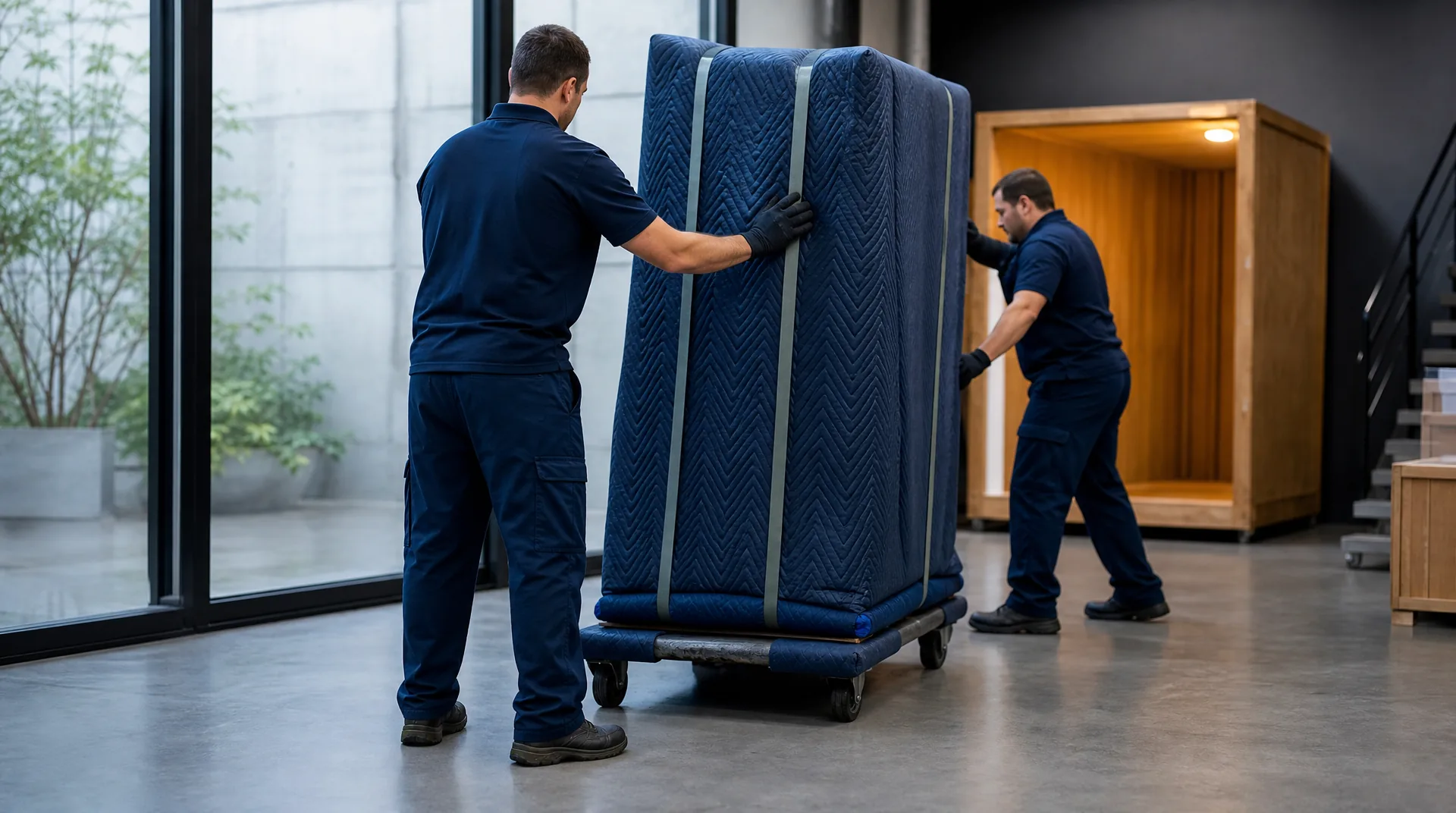
Most freight is priced on weight and distance. White glove freight is priced on what happens if it arrives damaged, because the value is in the item, not the pallet.
That is the real difference. With high-value or fragile freight, speed is table stakes. The job is getting it there intact, with the fewest hands between pickup and delivery that can drop, jostle, or mishandle it.
What “white glove” actually means
The phrase gets used loosely. Plenty of carriers call a careful delivery “white glove” when all they mean is the driver helps carry it in. Real white glove freight is about custody and handling the whole way, not just the last few feet.
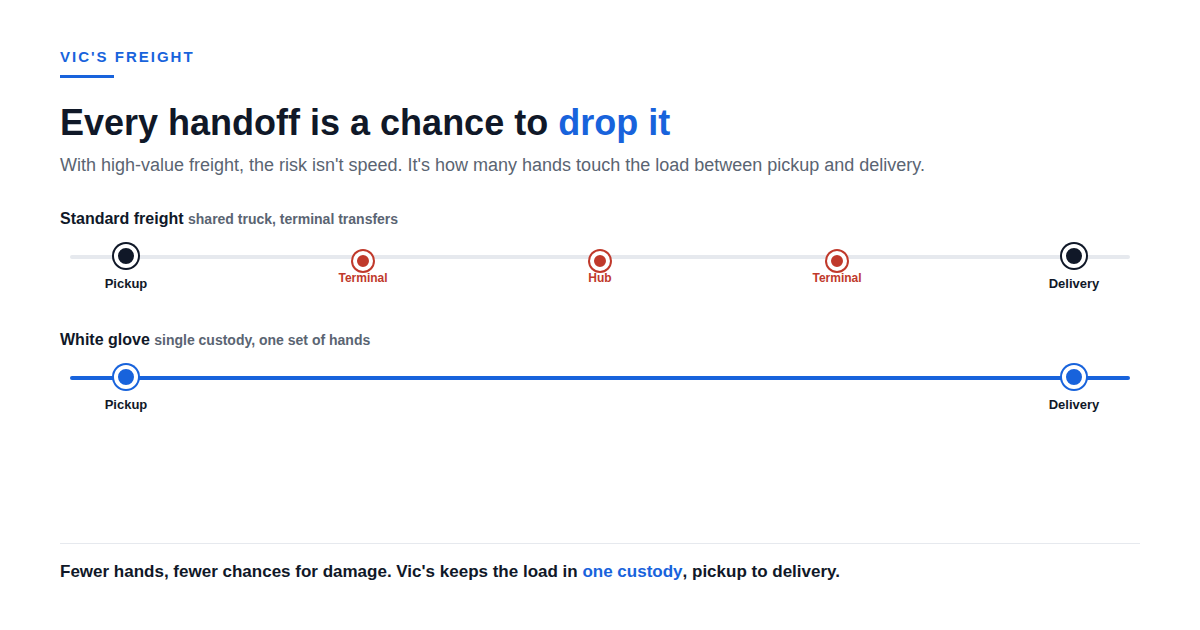
It means the load is matched to the right vehicle, secured properly, and kept in a single set of hands from origin to destination. No consolidation, no terminal transfers, no riding on a shared truck where it gets re-stacked in the middle of the night. The fewer times a high-value item changes hands, the fewer chances something goes wrong.
It also means the driver knows what is on the truck. On standard freight the driver moves a pallet count. On a white glove run the driver knows the unit is fragile, knows which way it has to sit, and knows it cannot be stacked on or shoved to make room for the next stop. That knowledge is part of the service. It does not exist when the load is anonymous cargo in a shared trailer.
Where standard freight goes wrong
Look at what actually happens to a normal LTL shipment. It gets picked up and taken to a terminal. It waits. It gets loaded onto a line-haul truck with other freight, driven to a hub, unloaded, sorted, and reloaded onto a second truck for the last leg. Then it hits another terminal before the final delivery. Each of those steps is a set of hands, a forklift, and a stack decision made by someone who has never seen your item and has no reason to treat it as special.
That is where damage comes from. Not usually the drive. The drive is smooth. The damage happens on the dock, when a unit gets set down hard, stacked under something heavier, tipped to fit a load plan, or clipped by a forklift in a crowded terminal at 2 a.m. Nobody signs their name to it. By the time you open the crate, the trail is cold and you are arguing over a claim instead of running your operation.
White glove removes the docks. One truck, one driver, no sort. The item that comes off at delivery is the item that went on at pickup, handled the same way the whole run. When something does go wrong, you also know exactly where to look, because one driver had it the entire time. There is no finger-pointing between three carriers and two terminals over who touched it last.
When it’s worth paying for
White glove earns its cost when the item is hard to replace, sensitive, or expensive enough that damage costs more than the careful handling ever would:
- High-value equipment, instruments, or electronics that cannot absorb rough handling.
- Fragile or calibrated items where a hard jolt means a repair, a recalibration, or a write-off.
- Freight that has to arrive presentation-ready, not just delivered to a dock.
If the item is rugged and easily replaced, standard freight is the smarter call. The moment replacement or downtime costs real money, careful single-custody handling stops being a luxury, which is the same logic behind when expedited freight is worth paying for.
Run the math the honest way. Add up the replacement cost, the lead time to get another unit built, and what it costs you to sit idle waiting on it. Set that against the price of a dedicated run. When the downside of a broken unit dwarfs the handling premium, the choice makes itself. White glove is cheap insurance against an expensive problem.
What this looks like in practice
- A high-value instrument that cannot ride through three terminals changing hands. One vehicle, one driver, secured and delivered intact.
- A sensitive unit that has to be handled a specific way at both ends, kept in the right vehicle and the right position the whole run.
- A shipment where the receiving side expects it in place and ready, not left on a loading dock to sort out later.
The common thread is control. You know which truck it is on, you know it is not being re-stacked, and you can tell the receiving side exactly when it lands. There is no hub in the middle to lose track of it and no shared trailer to blame. If something needs to be handled a certain way at either end, that instruction travels with the driver, not lost in a terminal handoff.
Where Vic’s fits
Vic’s runs dedicated, enclosed vehicles across the US and Canada with the shipment in one set of hands from pickup to delivery. For high-value and fragile freight, that single custody is the point: the load is matched to the right vehicle, secured, and never re-handled at a hub. We move it the way the value of the item requires, not just quickly.
Get an instant quote. Tell us what you are moving and how it has to be handled, and we will move it the way high-value freight needs to move.