Cargo Van vs Sprinter vs Box Truck: Which Expedited Vehicle Do You Need?
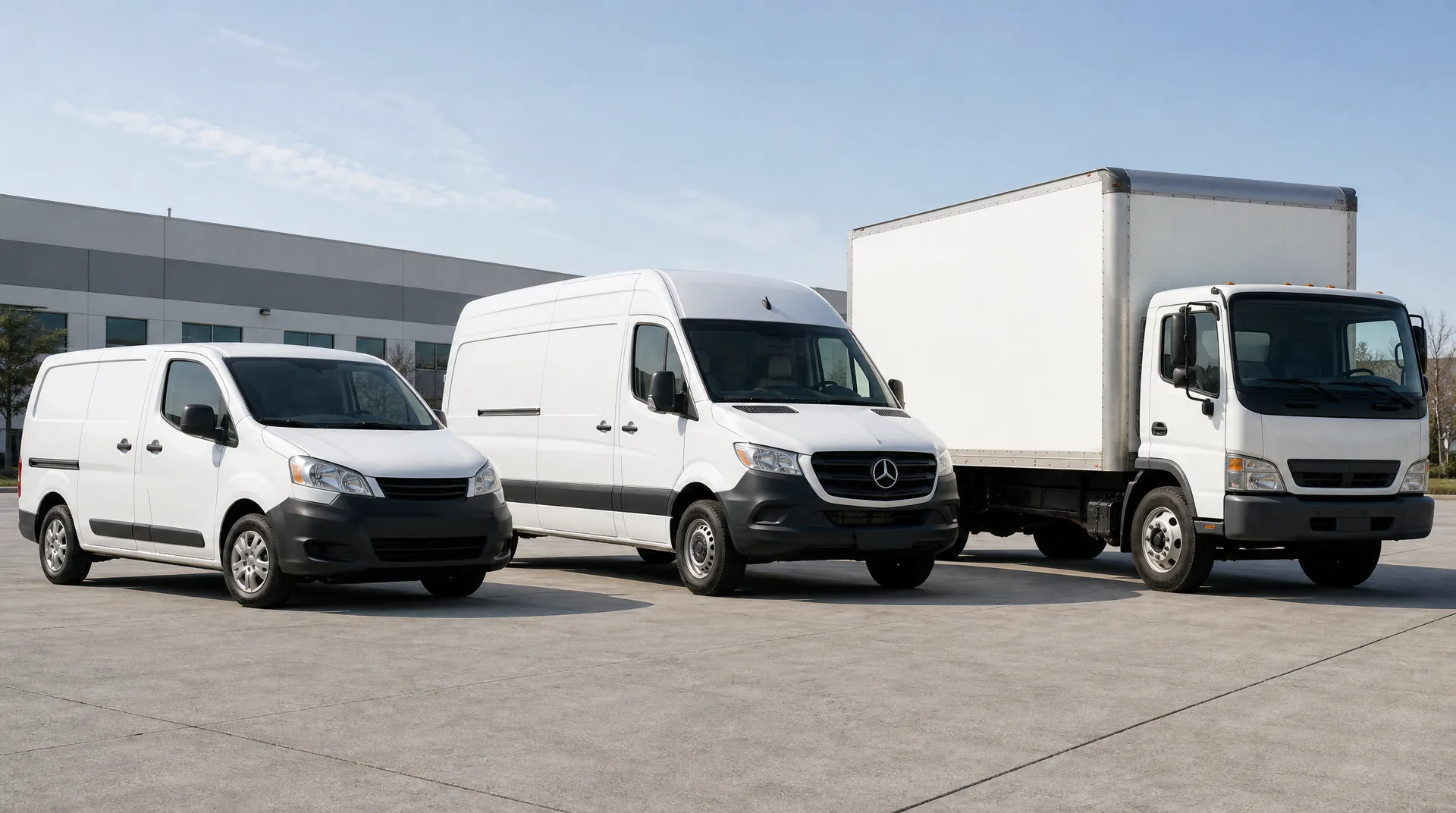
You’ve got a shipment that has to move now, and the quote came back on a box truck when you were picturing a van. Or the other way around. Either way the question underneath it is the same: how big a vehicle does this freight actually need?
It’s worth getting right, because the vehicle is most of what drives the cost on an expedited run. The good news is the freight usually decides for you. Once you know the footprint of what you’re shipping and how it loads, the right vehicle is mostly already chosen. Here’s how to read it.
Expedited vehicles at a glance
| Vehicle | Roughly fits | Best for |
|---|---|---|
| Cargo van | 1 to 3 pallets, lighter loads | Boxes, parts, small skids; the fastest, lowest-cost expedite |
| Sprinter (high-roof) van | A few pallets, taller cargo | The same urgency with more height or a bit more volume |
| Box truck | Several to a dozen-ish pallets, liftgate available | Palletized freight, heavier loads, no loading dock on either end |
| Straight truck | The most pallets and the longest freight short of a tractor-trailer | Bigger runs that still need one driver, one vehicle, direct |
This is all enclosed expedited equipment. Open-deck loads are a different decision, which we cover in hot shot vs expedited freight.
The freight picks the vehicle, not the other way around
The mistake is starting from the truck. Start from the freight. Three things about the shipment decide almost every expedited vehicle call:
- Footprint, not weight. Expedited loads run out of room before they run out of weight. A light, bulky shipment fills a van long before it gets heavy. Count the pallets and measure the largest piece first; the poundage usually sorts itself out after.
- How it loads and unloads. The moment freight rides on a pallet and there’s no dock or forklift on one end, you’ve left van territory. That’s a box truck with a liftgate, and it’s not a luxury, it’s the difference between a delivery and a driver stuck at a closed dock.
- How tall and how long. Height is what pushes a cargo van up to a high-roof sprinter. Length is what pushes a box truck up to a straight truck. Neither shows up on a weight ticket, which is why weight alone keeps quoting the wrong vehicle.
Weight rarely picks the vehicle. Footprint does.
Walking up the ladder
Cargo van is the floor of expedited and usually the fastest, cheapest way to move something urgent. Think boxes, loose parts, a skid or two. It drives like a car, parks anywhere, and gets in and out of tight spots a bigger truck can’t.
Sprinter is the same idea with more room overhead. When the freight is taller than a standard van takes, or there’s a little more of it, the high-roof sprinter handles it without jumping all the way to a box truck. Still nimble, still direct.
Box truck is where palletized freight lives. More skids, heavier loads, and the part that matters most, a liftgate when there’s no dock to load against. If your pickup or delivery is a back door and a pallet jack instead of a loading dock, this is usually your floor, not your van.
Straight truck is the top of the single-vehicle ladder: the most pallets and the longest pieces you can move before you’re into tractor-trailer territory. It still keeps the thing that makes expedite work, one driver, one vehicle, straight from pickup to delivery, no terminal in the middle.
What this looks like in practice
- A dozen boxes of replacement parts that have to be across the state by tonight. Light, small, no pallet. That’s a cargo van, and paying for anything bigger is just moving empty space around.
- Four pallets going to a job site with no loading dock, just a crew and a back gate. It would weigh in fine for a van on paper, but it’s palletized and there’s nowhere to unload it by hand. Box truck with a liftgate. The dock situation made the call, not the weight.
- A run of tall, light crates that won’t clear a standard van’s roof. Not heavy, not a lot of it, but it doesn’t fit. A high-roof sprinter takes it without bumping you up to a box truck you don’t need.
Same question every time: what’s the footprint, and how does it load?
What to tell us up front to get the right vehicle the first time
You don’t need to know which truck you want. You need to know your freight. Have these ready and the right vehicle is easy to call:
- The number of pieces or pallets, and whether it’s palletized or loose.
- The dimensions of the largest item, especially height.
- The rough total weight (a ballpark is fine).
- Whether there’s a loading dock and a forklift at pickup and delivery, or whether it has to load by hand.
That’s the whole decision. Get those four things to a dispatcher and you’ve skipped the guesswork. If you’re still deciding whether you even need a dedicated expedited run, start with what expedited freight is and when it’s worth it.
Where Vic’s fits
Vic’s runs the full expedited ladder, cargo van, sprinter, box truck, straight truck, across the US and Canada, each one assigned to a single shipment and driven straight through, tracked the whole way. We match the vehicle to the freight instead of rounding up to whatever’s parked closest, so you’re not paying to move empty space and you’re not stuck at a dock with no liftgate. Tell us what you’re moving and we’ll put it on the right vehicle the first time.
Get an instant quote. Give us the pieces, the size, and the dock situation, and we’ll tell you exactly which vehicle your shipment needs.