Hot Shot Trucking vs Expedited Freight: What Is the Difference (and Which Do You Need)?
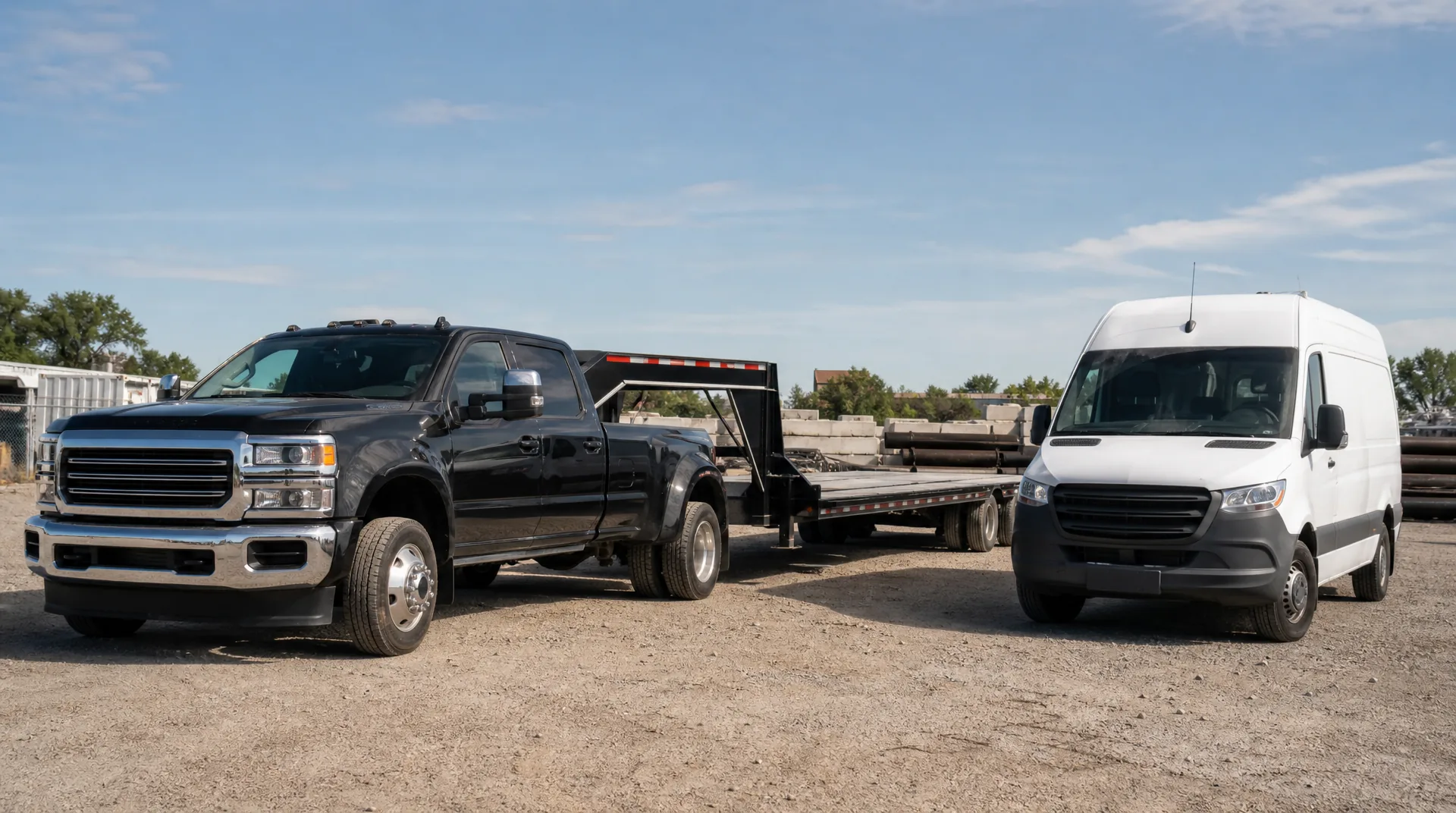
A lot of shippers choose hot shot because it looks cheaper, then find out they were comparing the wrong thing.
Hot shot and expedited are not two prices for the same service. They are two different ways to move freight, and the difference is simple: hot shot is about the trailer, expedited is about the deadline. Get that backwards and you either overpay for capacity you did not need, or save a few dollars on a truck that was never going to make your window. Here is how to tell which one your shipment actually needs.
Hot shot vs expedited, at a glance
| Hot shot | Expedited | |
|---|---|---|
| Equipment | Pickup truck pulling a flatbed or gooseneck (open deck) | Cargo van, sprinter, box truck, straight truck (enclosed) |
| Best for | Open-deck, oversized, construction, steel, machinery | Parts, sensitive or high-value freight, anything weather-protected and deadline-critical |
| Who is behind it | Often a single owner-operator sourced off a load board | A dispatched operation that controls its own capacity |
| What sets the speed | Whether a driver happens to be available and near you | Built around your deadline, with dispatch and tracking |
| Typical cost | Can be lower for open-deck short hauls | Priced per the run: size, distance, deadline |
What hot shot actually is
Hot shot moves smaller loads on an open deck, usually a heavy-duty pickup pulling a flatbed or gooseneck. For a shipper, two things matter. It is open, so the freight has to be fine out in the weather and riding in the open. And a lot of hot shot capacity is independent drivers off a load board, so it is often cheap, but the speed depends on whoever is free when you call.
That last part is the catch shippers miss. There is no operation behind a single truck. If that driver breaks down, gets held at a shipper, or runs out of hours, your load waits until someone else picks it up. Nobody is repositioning a backup. When the freight is open-deck material and the clock has room, none of that hurts you. The trouble starts when you treat a hot shot rate as a delivery promise. A rate is not a plan.
What expedited freight actually is
Expedited is enclosed and dispatched. It runs on a ladder of vehicles, cargo van through straight truck, each assigned to one shipment and moving straight from pickup to destination, tracked the whole way. The point is not the truck. It is that the operation is built backward from your delivery window, so the deadline is the thing being managed, not just the miles.
Enclosed matters for two reasons. One is protection: weather, dust, and road grime never touch the load. The other is security: the freight is sealed and out of sight, which matters for high-value cargo. Dispatched matters because someone owns the outcome. If a lane closes or a truck slips, dispatch re-routes and keeps you told. You are buying an operation, not a favor.
How to tell which one you need
It comes back to trailer versus deadline. Three questions sort it out:
- Does the freight need to be enclosed? Steel and machinery ride fine on an open deck. Electronics, parts, anything that cannot get wet or has to stay secure, do not. Enclosed means expedited.
- How hard is the deadline? If there is flex, a hot shot driver off a board can be a good deal. If a line goes down or a part has to be there by morning, you want dispatched capacity and live tracking, not a single driver’s calendar.
- Who is accountable for the run? Hot shot is usually one person and one truck. Expedited gives you an operation that can reposition, re-route, and answer the phone at 2 a.m.
A hot shot driver hauls what fits on the deck. An expedited carrier owns the clock.
What this looks like in practice
Three shipments, three different calls:
- A skid of steel brackets to a job site, not weather-sensitive, with a day of flex. Open deck, short haul. This is hot shot’s home turf, and usually the cheapest way to move it.
- The same kind of freight, but it has to be on the assembly line by 6 a.m. tomorrow. Even if a flatbed could carry it, you now need dispatched capacity and live tracking, not a driver you hope is free. The deadline makes the call.
- A sealed crate of high-value electronics that cannot be exposed to weather or handled loosely. It would fit an open deck by size, but the cargo itself rules that out: enclosed, secure, one set of hands. Here the freight makes the call, not the price.
Same question every time: is this about the trailer, or about the deadline?
When the cheaper number is the wrong call
The mistake is comparing two rates as if they buy the same thing. A hot shot quote buys a truck and a driver. An expedited quote buys a managed delivery. When you have flex and open-deck freight, take the lower number and move on. When the load is enclosed, secure, or tied to a hard window, the lower number is a bet that nothing goes wrong on a truck with no backup. A stopped line or a rejected delivery costs more than the gap between the two rates ever will. Match the service to what the freight needs, then compare price inside that lane.
Where Vic’s fits
Vic’s runs expedited: enclosed vehicles from cargo van to straight truck, dispatched and tracked across the US and Canada, for freight that has to arrive protected and on time. If your load is open-deck material with room in the schedule, a hot shot carrier is probably your cheapest path. If it has to be enclosed, secure, and on a deadline someone is actively managing, that is the work we do.
Get an instant quote. Tell us what you are moving and when it has to land, and we will tell you straight whether expedited is the right call.