Aerospace Logistics: What Makes Moving Aircraft Parts Different
Aircraft parts move with their paperwork or they don't move at all. What makes aerospace freight different, and the mistakes that ground a shipment.
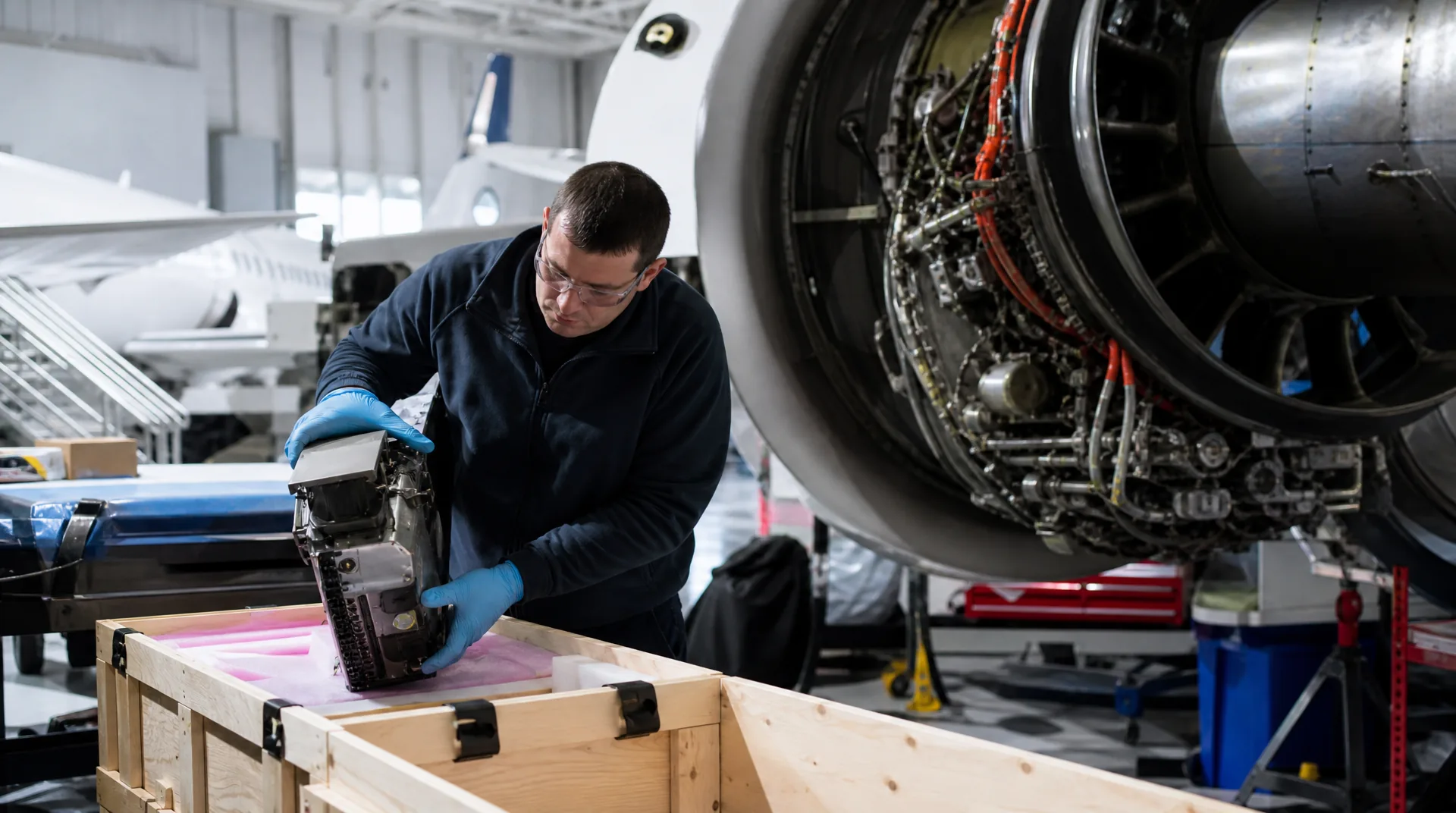
Most freight just needs to get there. An aircraft part needs to get there with its deadline and its documentation intact, and ordinary freight handling breaks both.
That is the real difference. With an aircraft part, the shipment and its paperwork are the same delivery, and the clock is usually a grounded aircraft.
Aircraft parts vs ordinary freight, at a glance
| Ordinary expedited freight | Aircraft parts | |
|---|---|---|
| The clock | Tight | Often AOG: hours, visible, expensive |
| Documentation | Standard bill of lading | The part’s paperwork has to stay with it, intact, end to end |
| Custody | Can change hands | A single set of hands, kept traceable |
| Cost of failure | A late delivery | A grounded aircraft |
AOG parts are not the same as routine parts
Not every aircraft part is an emergency. Some move on a maintenance schedule set weeks out. A shop knows the check is coming, orders ahead, and the part just needs to arrive before the work starts. That move has room in it.
An AOG part has no room. The aircraft is on the ground and cannot fly until the part is on it. Every hour it sits is an hour of missed flying and crew waiting. You do not plan an AOG move in advance because you do not know it is coming until the aircraft is already down.
The two look similar on paper. A box, a weight, an address. They are not the same job. A routine part can wait for the next scheduled run. An AOG part sets its own schedule the moment it is called, and everything else moves around it. The first thing to get right is which one you have.
What actually delays an aircraft part
Speed on the road is rarely the thing that grounds the delivery. The delays that hurt come from everything around the driving:
- Paperwork out of sync. If the documentation the part needs to be accepted is missing, wrong, or arrives after the part, the install cannot start. The truck was on time and the aircraft is still on the ground.
- The handoff. Every time a shipment changes hands it can sit on a dock or wait for the next leg. Each transfer is a place to lose hours.
- The border. A part heading to a Canadian shop has to clear customs. If the paperwork is not moving ahead of the truck, the crossing becomes the delay.
- The wrong vehicle. Send a truck that cannot protect or fit the part and someone has to repack or wait for the right one. That is time the aircraft does not have.
None of these is about how fast the truck goes. They are about how the move is built. Get them wrong and speed on the highway does not save you.
What to think about when the freight is an aircraft part
Three things separate an aircraft-part move from a normal rush shipment:
- The deadline is usually an AOG clock. A grounded aircraft is costing money by the hour, so the move is built backward from the install, not just shipped fast. When the part is grounding an aircraft, the real question is often whether ground beats the next flight out, which we get into in our piece on AOG and when ground is faster than air.
- The documentation travels with the part. Whatever the part needs to be accepted at the other end has to stay with it and stay in order. A fast delivery with the paperwork out of sync is still a delayed install.
- The handling has to match the part. Avionics and sensitive components cannot ride exposed or get handled loosely. Large or crated assemblies need the right vehicle. Enclosed, single-custody, matched to the freight.
A late pallet is a problem. A late aircraft part is a grounded plane. The whole move is organized around that.
How the move is handled
The way you keep those three things right is to keep the move simple. One driver, one vehicle, one set of hands from pickup to delivery. No transfers, no docks. The part goes on the truck and stays there until it reaches the aircraft or the shop.
Single custody does more than protect the part. The same person carrying the part is carrying its documentation, so nothing gets separated at a handoff because there is no handoff. And it keeps the timeline honest. You always know where the part is and when it will land, which matters when someone on the maintenance line is asking by the hour.
The vehicle is matched to the part before it moves. Sensitive components ride enclosed and protected. Larger crated assemblies get a truck that fits them without repacking. On a cross-border move, the documentation goes ahead so the crossing is cleared before the truck arrives. The move is built backward from the install to protect the clock and the paperwork.
What this looks like in practice
- An AOG part to a maintenance line, where hours are the whole game. One driver, pickup straight to the aircraft, dispatched on the part’s clock.
- A sensitive avionics component that cannot be exposed or handled loosely. Enclosed vehicle, careful handling, kept in one set of hands.
- A part moving to a Canadian MRO. Now the documentation has to clear the border too, so it goes ahead of the truck and the crossing does not become the delay.
Where Vic’s fits
Aerospace is one of the verticals Vic’s is built for: AOG and aircraft-part moves on dedicated, enclosed ground across the US and Canada, kept in single custody with the part’s documentation alongside it. We move the part the way the timeline and the paperwork require, not just quickly. If you are weighing whether a grounded-aircraft part should fly or drive, start with when ground beats the next flight out.
Get an instant quote. Tell us the part, where it is coming from, and where the aircraft is, and we will move it the way an aircraft part needs to move.